Content
Ask a composite insulator plant why a shipment was held, and the answer is rarely the silicone housing. It is usually the epoxy pultruded core: a 16 mm rod that arrived 0.3 mm undersized, or one whose dye penetration test opened voids along the glass-resin interface. The core carries the whole mechanical load, and every fitting crimped onto it inherits its tolerances.
The short version before the detail: an epoxy pultruded core is a bundle of continuous glass rovings pulled through an epoxy bath and a heated die, cured into a dense rod or hollow profile, then cut to length. The glass supplies strength, the epoxy holds the glass and keeps water out. The numbers on the data sheet decide whether the part survives thirty years of load and weather.
Pultrusion is a continuous process. Rovings are pulled from creels, wetted with resin, shaped by a preformer and drawn through a heated steel die where the epoxy gels and cures; a haul-off grips the finished profile and a saw cuts it to length. Because the fiber never stops moving, filaments stay nearly parallel to the axis, which is the direction in which a core must resist tension and bending.
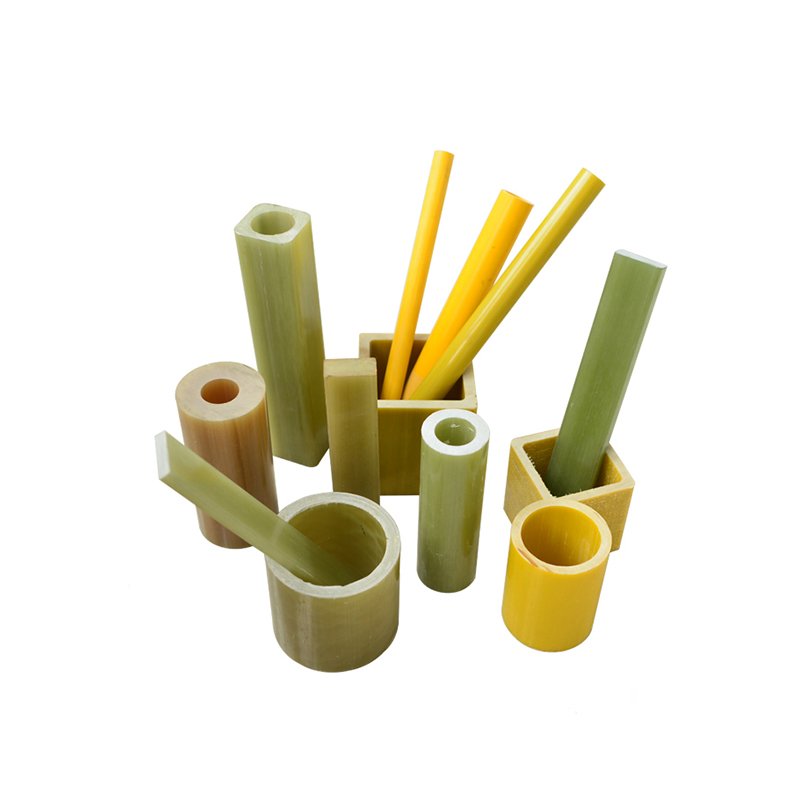
"Core" is used in two related ways. In a composite insulator, it is the solid rod inside the silicone housing, carrying load while the housing sheds rain and pollution. In a hollow profile or a filament-wound tube, it is the inner member that gives the section its stiffness. Both demand the same thing: a dense, void-free glass-epoxy composite with tight diameter control and low bow.
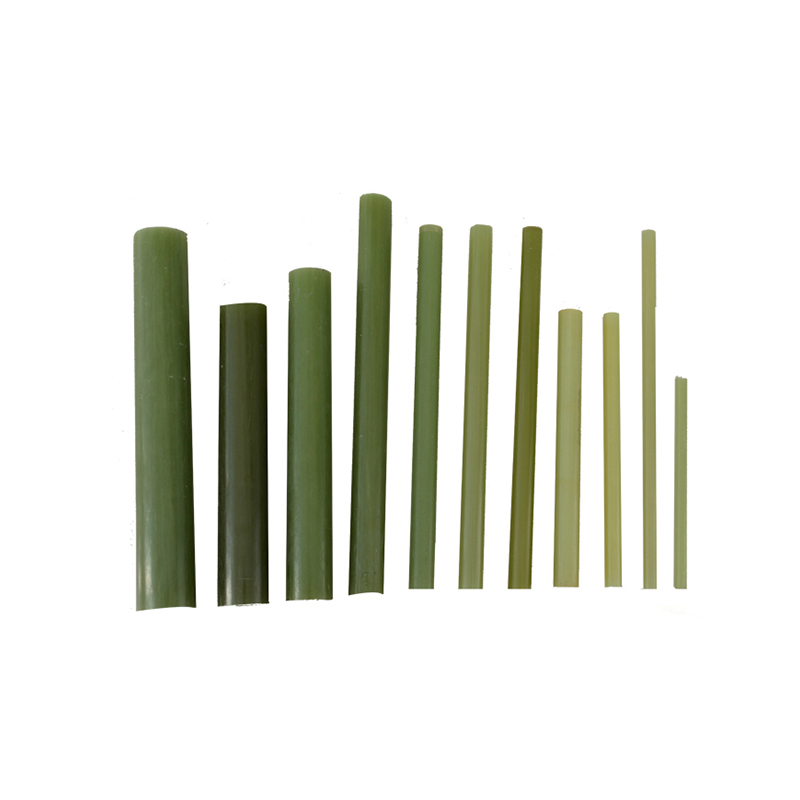
The same product is quoted under three names. Epoxy rod describes the matrix, fiberglass rod describes the reinforcement and is often used loosely for polyester too, and insulator core rod describes the end use. Ask which resin system and glass content sits behind the label before comparing prices. Most cores are round, from about 6 mm to 40 mm, with high-voltage insulator rods usually between 16 mm and 28 mm.
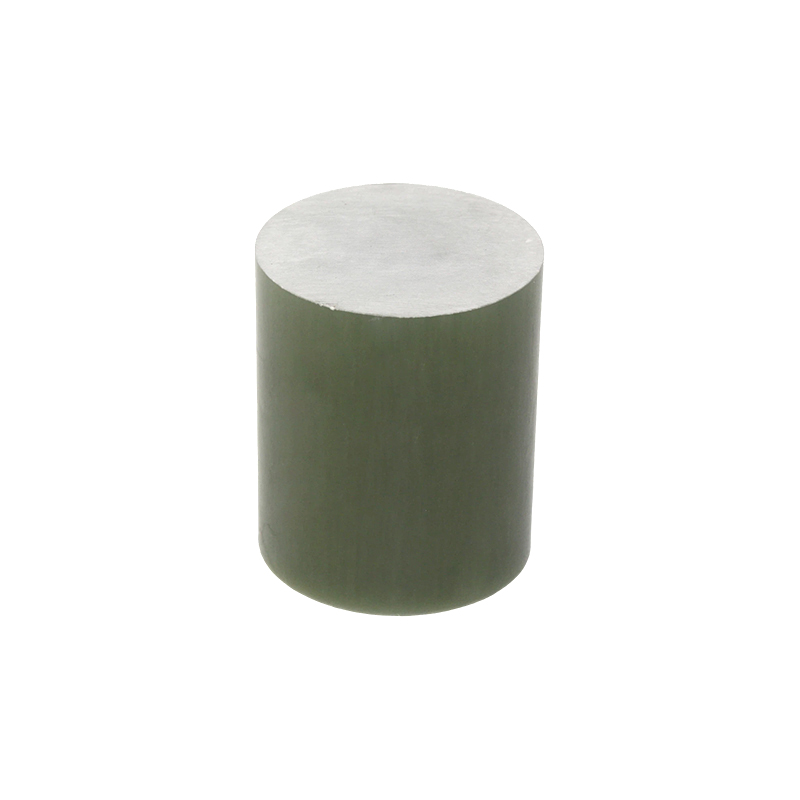 Epoxy Fiberglass Rod for High-Voltage Insulator CoresPultruded glass-fiber reinforced epoxy rod with high fiber content, suited to high-voltage insulator cores and precision machined parts.View Product →
Two rods can use identical E-glass and still behave differently after ten years in a coastal substation. Epoxy wets and bonds to sized glass well, shrinks less on cure than polyester, and resists hydrolysis under wet electrical stress. That is why it dominates high-voltage cores while polyester stays common in low-cost structural profiles.
| Matrix resin | Typical rod tensile strength | Moisture and hydrolysis resistance | Typical fit |
|---|---|---|---|
| Epoxy, anhydride or amine cured | High, often above 1,000 MPa at 75 to 80 percent glass by weight | Very good; low water uptake, stable under wet electrical stress | Insulator cores, bushings, arresters, railway insulators |
| Vinyl ester | High, close to epoxy in many profiles | Good; strong against acids and salts | Chemical and coastal structures, some core applications |
| Unsaturated polyester | Moderate | Fair; more prone to hydrolysis | Economy profiles and general structural use |
| Polyurethane | Moderate to high, with good toughness | Moderate | Fast-curing structural profiles |
A quote that looks 20 percent cheaper often swaps epoxy for polyester while keeping the same "FRP rod" description. Glass content may also be quoted by weight, often 75 to 82 percent, rather than by volume, 60 to 70 percent, which makes two data sheets look incompatible when they simply use different bases. Pin down both before comparing prices.
Incoming inspection needs a specification with numbers in it and a short list of checks per batch:
Put the standards into the request for quotation as well: IEC 61109, GB/T 19519 and JB/T 8460 cover the rod performance and test methods that utilities and insulator makers expect. Suppliers running a three-stage inspection system, self check, cross check and a dedicated inspector with the authority to reject a batch, can normally hand over the matching records.
If the rod itself is still being defined, this guide to choosing FRP rod profiles covers the selection logic before a drawing is frozen.
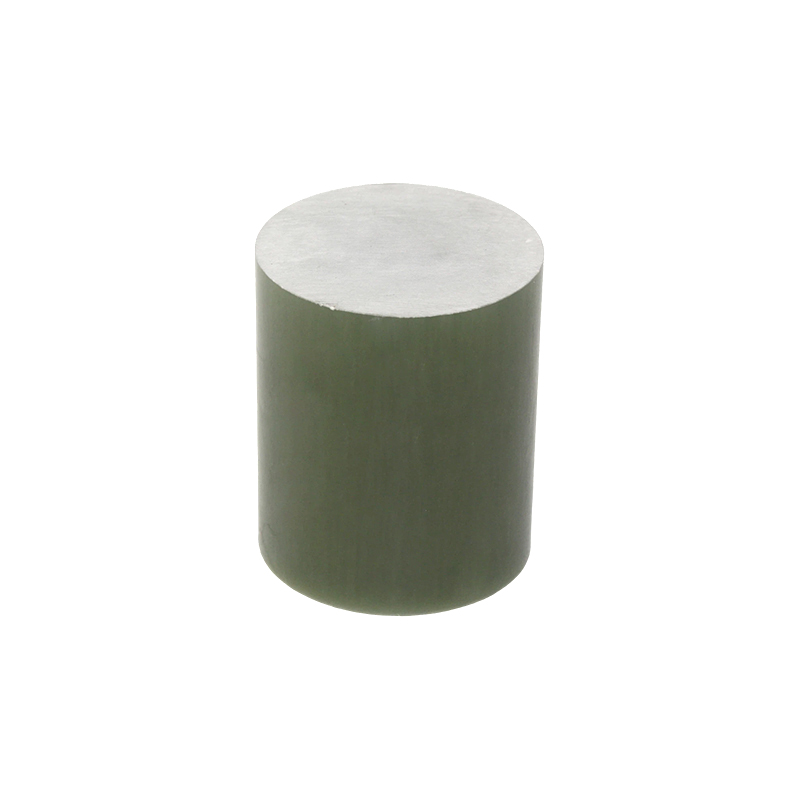 Composite Insulator Core Rod for Transmission LinesGlass-fiber reinforced resin core rod that carries mechanical load in composite insulators for high-voltage transmission and substation equipment.View Product →
Electrical insulation is the biggest application, but not the only one. The same rod appears wherever a part must be strong, insulating and rust-free:
Each application shifts the priority. A railway core is judged on fatigue and impact, a coastal post insulator on hydrolysis resistance, a fuse component on dimensional accuracy because it must seat inside a close-fitting tube. Say which of these matters most and the specification can be tuned rather than padded.
Where a hollow member is needed instead of a solid rod, filament winding is usually the better route, since the winding angle can be tailored for hoop and torsional loads a pultruded rod cannot address.
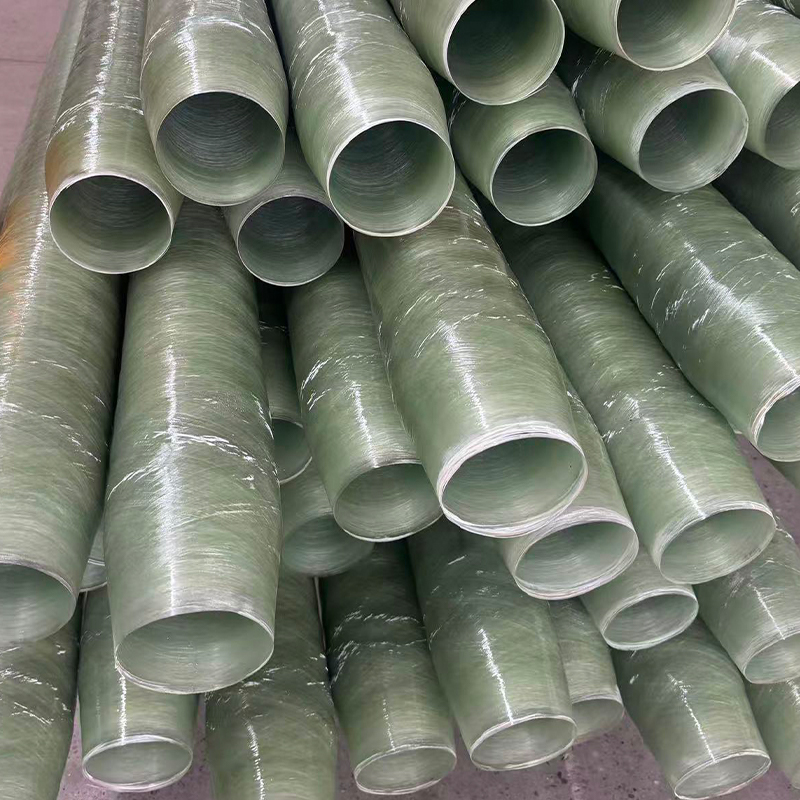 Filament Wound Composite Tube for Insulating ApplicationsHollow glass-fiber reinforced resin tube for load-bearing insulation where solid rods are unsuitable, with customizable dimensions and end treatments.View Product →
Most field problems appear at the interface between rod and end fitting, not in the middle of the rod. Radial crimping compresses the core onto the fitting; too little and the joint slips under tension, too much and the filaments crack circumferentially. The acceptable window depends on rod diameter tolerance and fitting bore, so both parts should be specified together.
Sealing matters just as much. Water reaching an unsealed rod end can travel along the glass-resin interface and start a brittle fracture, so a filled, well-bonded seal plus a clean cut end removes most of the risk. Crimp quality also depends on the fitting as much as on the rod, and a poorly toleranced bore wastes a perfectly good core.
Not always. Fiberglass rod names the reinforcement only; the matrix may be epoxy, vinyl ester or polyester, and the difference in cost and durability is significant. Get the resin system in writing.
For crimped insulator cores, plus or minus 0.1 mm on ground rod is common and worth the cost. For structural parts with generous clearances, plus or minus 0.3 mm on as-pultruded rod is usually enough.
Yes, with carbide or diamond tooling and light passes. Heat build-up is the main risk because it can soften the matrix locally, so seal any machined surface that will face weather.
Qualified cores in composite insulators are expected to serve for decades. Failures rarely come from the glass itself; they trace back to voids, incomplete cure or moisture entering at the end fittings.
An epoxy pultruded core is a small part of a large asset, which is exactly why it deserves a written specification. Fix the resin system, the basis of the glass content figure, the diameter tolerance, the void criteria and the test standard in the purchase order, and disagreements move from the assembly line to the data sheet, where they are far cheaper to settle.
Taizhou HuaDong Insulated Material Co., Ltd. has produced FRP rods, epoxy cores, winding tubes, composite insulators and metal end fittings since 1994, operating an ISO 9001 quality system and testing to standards such as IEC 61109, GB/T 19519 and JB/T 8460, with customers across Asia, Europe, Africa and the Americas.
Contact Us

jszn@vip.163.com
jsthim@188.com

0086 523-88026699
0086 523-88665172



Quick Links
Product Categories
Message Us Now !