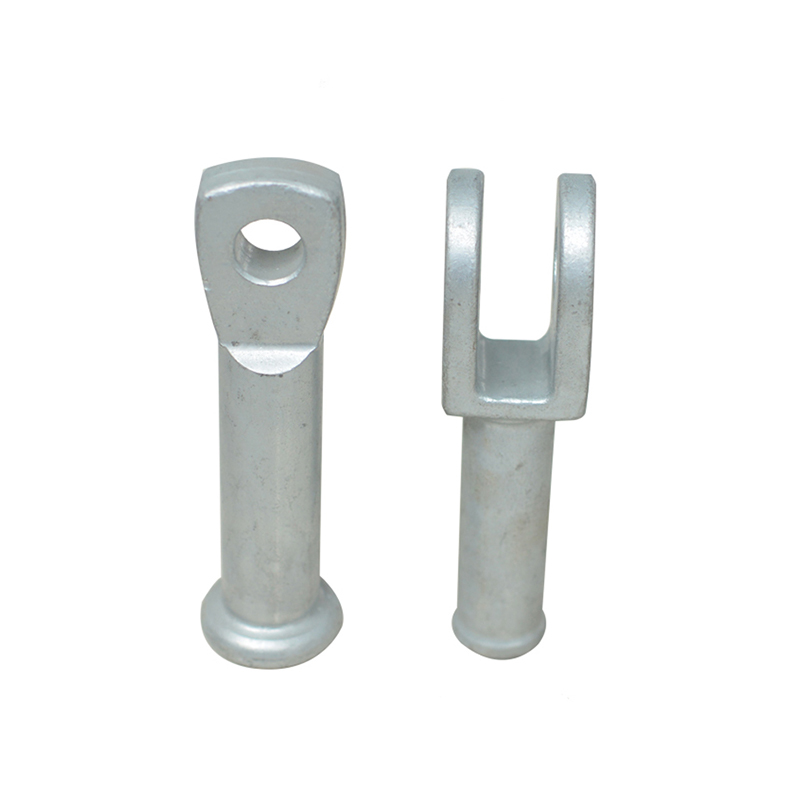
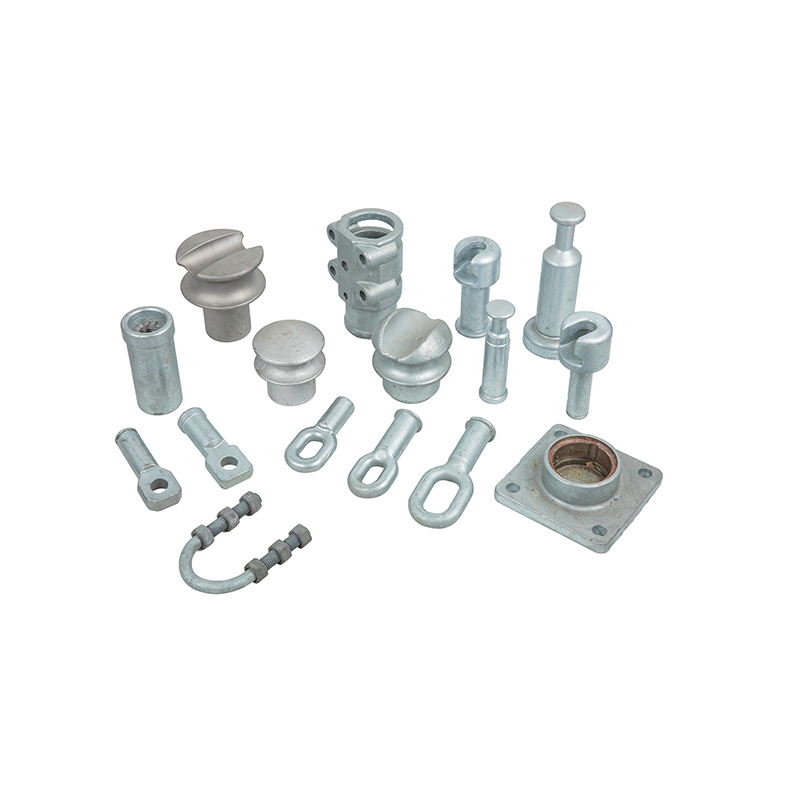
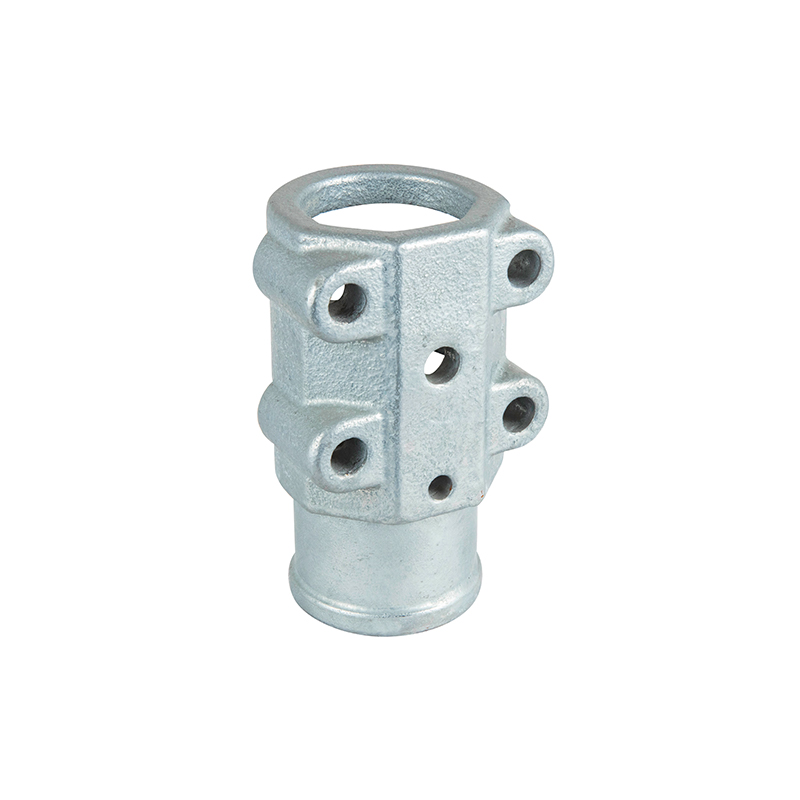
Metal end fittings are various types of metal accessories used in conjunction with insulators within power systems. They serve as indispensable core components in overhead transmission lines, distribution lines, and substations, primarily utilized for connecting, securing, and suspending insulators in relation to conductors, towers, and poles.
1. Main Functions of Metal Fittings Connection Function: To link insulators with conductors, towers, cross-arms, or other fittings, thereby establishing an electrical pathway. Securing Function: To anchor components such as conductors and insulators, ensuring their positional stability on the tower and enabling them to withstand mechanical loads—including conductor tension, wind loads, and ice loads. Suspension Function: To facilitate the flexible suspension of insulator strings—typically through the interlocking of ball-and-socket fittings—thereby simplifying installation and maintenance procedures. Mechanical Protection Function: To shield components, such as conductors and insulators, from mechanical damage, thereby extending their service life. Voltage Equalization and Lightning Protection Function: Certain fittings are designed to optimize electric field distribution and provide protection against lightning strikes, thereby enhancing the operational safety of the power line.
2. Main Types of Metal Fittings AC Fittings: Used in AC transmission lines to connect insulator strings with towers or conductors; common examples include ball-and-socket fittings, clevis fittings, and right-angle plates. DC Fittings: Used in DC transmission lines—such as Ultra-High Voltage (UHV) DC lines—where the design places greater emphasis on corona resistance and corrosion resistance; structurally, these fittings are typically more robust. Ring-type Fittings: Shaped like an "O" or "D" ring, these serve as connecting rings or turning rings used to alter the direction of conductors or insulator strings; common examples include connecting rings and U-bolts. Single/Double-Ear Fittings: Single-ear fittings feature a ring structure at one end and a perforated ear-plate at the other; double-ear fittings feature ear-plates or ring structures at both ends. These are frequently used to connect tower cross-arms with insulator strings—examples include single-clevis plates and double-clevis plates. Tension Fittings: Fittings designed to withstand the tensile force of conductors, such as tension clamps. Splicing Fittings: Fittings used for joining or splicing conductors, such as parallel-groove clamps.
3. Materials and Manufacturing Processes of Power Fittings Main Materials: Primarily manufactured using corrosion-resistant, high-strength materials such as hot-dip galvanized steel, aluminum alloy, and stainless steel. In certain specialized environments, higher-grade materials—such as titanium alloys—may be employed. Surface Treatment: The commonly used anti-corrosion treatment is hot-dip galvanizing, which effectively prevents rusting in outdoor environments characterized by high humidity, salt spray, and similar conditions. Manufacturing Processes: These include casting, forging, crimping, and other techniques. For certain fittings, a crimping method is utilized to establish a permanent mechanical and electrical connection between the fitting and the conductor or insulator.
4. Quality Inspection of Power Fittings Dimensional Inspection: Ensures that the dimensions of the fittings comply with design specifications, thereby guaranteeing assembly precision. Galvanizing Layer Inspection: Measures the thickness of the galvanized coating to ensure that anti-corrosion performance meets the required standards. Hardness Testing: Assesses the hardness of the fitting material to verify its mechanical strength. Tensile Testing: Conducts tensile tests to determine the fitting's ultimate tensile strength and breaking load, thereby ensuring an adequate safety margin.
5. Installation Methods Bolted Connection: Secures the fitting to insulators, towers/poles, or conductors using bolts and nuts. Crimped Connection: Utilizes a crimping machine to establish a permanent mechanical and electrical connection between the fitting and the conductor. Pinned Connection: Employs pins to secure ring-type or clevis-type fittings to other components. Suspension/Hook Connection: Examples include the "ball-and-socket" connection method, which pairs a ball-eye fitting with a socket-clevis fitting.
About Us
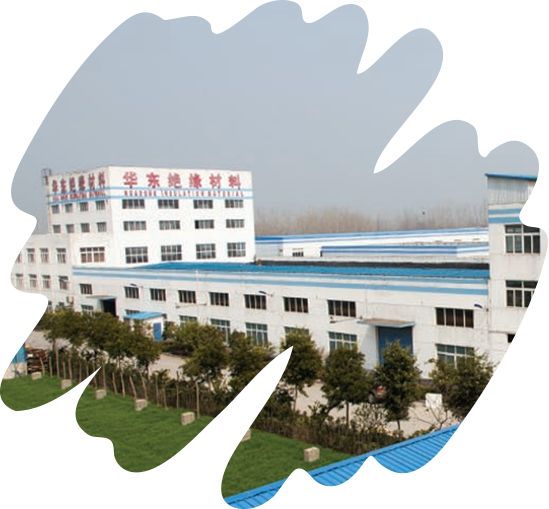
Taizhou HuaDong Insulated Material Co., Ltd.
As China Metal end fittings manufacturers and Metal end fittings factory, Taizhou HuaDong Insulated Material Co., Ltd (FORMER Yangzhou Dajieshi FRP products Co., Ltd), which was founded in October in 1994.
Our company is mainly engaged in the production of FRP ROD profiles, related terminal parts and accessory products. The terminal and accessories products such as various types of composite insulators, silicone rubber insulator fittings, line fittings and so on.The epoxy fiberglass core we produce as an intermediate connector and insulating parts is widely used in all fields and many kinds of composite insulator production. The profiles and composite insulators are widely used in electric power electronics and electrical railways. In the construction, automotive and environmental protection field IHIM products arewidely sales in North and South America.Africa.Asia. Europe ete such as USA.Kenya. Korea.India, Vietnam, Iran, Russia, Germany.Romania and other countries and vast areas in our country. THIIM is becoming a well-known supplier for insulation products field globally.
A composite insulator that fails in service rarely fails because the silicone housing was the wrong color. It fails because the fiberglass core inside it was selected, manufactured, or handled withou...
An overhead railway line is only as reliable as its least visible component. The railway insulator, often taken for granted, is the hard-working barrier that keeps high-voltage current in the catenar...
At 6:40 on a weekday morning, the 27.5 kV feeder inside a busy urban tunnel loses insulation. The pantograph drops, the train glides to a halt, and every service behind it stacks up. In most cases th...
For engineers and procurement teams comparing composite insulator options, the direct answer is this: for long span high voltage transmission lines rated between 10kV and 500kV, a composite suspensio...
Metal end fittings are the connecting, securing, and suspension hardware that hold insulators, conductors, and rails together across power transmission, distribution, and railway networks, and the ri...
Metal end fittings are the metal accessories that connect, secure, and suspend insulators against conductors, towers, and poles, and they function as one of the indispensable core components inside overhead transmission lines, distribution lines, and substations. Wherever a composite or porcelain insulator string is attached to a tower, cross arm, or conductor, a metal end fitting is doing the mechanical and electrical work behind that joint. Taizhou HuaDong Insulated Material Co., Ltd. produces this category of hardware alongside its insulator and FRP rod lines, which lets the fitting be matched to the exact insulator it will be paired with.
What Metal End Fittings Actually Do
Before choosing a fitting, it helps to separate the five jobs this hardware performs on a line. Taizhou HuaDong Insulated Material Co., Ltd. designs its fitting range around these same functions rather than treating them as generic hardware.
1
Connection
Links insulators with conductors, towers, cross arms, or other fittings to establish the electrical pathway.
2
Securing
Anchors conductors and insulators so they stay in position on the tower and can withstand conductor tension, wind loads, and ice loads.
3
Suspension
Allows insulator strings to hang flexibly, typically through interlocking ball and socket fittings that simplify installation and maintenance.
4
Mechanical Protection
Shields conductors and insulators from mechanical damage, which extends the service life of the components around it.
5
Voltage Equalization and Lightning Protection
Certain fittings optimize electric field distribution and add protection against lightning strikes, improving line safety.
Main Types of Metal Fittings
The fitting family breaks down into six functional types, and Taizhou HuaDong Insulated Material Co., Ltd. references this same classification when specifying hardware for a customer project.
AC Fittings
Used on AC transmission lines to connect insulator strings with towers or conductors. Common examples are ball and socket fittings, clevis fittings, and right angle plates.
DC Fittings
Used on DC lines including ultra high voltage DC lines, where the design places extra emphasis on corona resistance and corrosion resistance, with a structurally more robust build.
Ring Type Fittings
Shaped like an O or D ring and used as connecting rings or turning rings to change the direction of conductors or insulator strings, such as connecting rings and U bolts.
Single and Double Ear Fittings
Single ear fittings pair a ring at one end with a perforated ear plate at the other; double ear fittings have ear plates or rings at both ends. Used to connect tower cross arms with insulator strings, such as single clevis plates and double clevis plates.
Tension Fittings
Built to withstand the tensile force of conductors, such as tension clamps.
Splicing Fittings
Used for joining or splicing conductors, such as parallel groove clamps.
AC Fittings Compared With DC Fittings
Since AC and DC fittings are often confused, the panel below sets out the distinction that Taizhou HuaDong Insulated Material Co., Ltd. draws between the two when quoting a project.
AC Fittings
Applied on AC transmission lines to connect insulator strings with towers or conductors. Typical hardware includes ball and socket fittings, clevis fittings, and right angle plates.
DC Fittings
Applied on DC lines such as ultra high voltage DC lines. The design gives more weight to corona resistance and corrosion resistance, and the resulting fittings are structurally more robust.
Materials and Manufacturing
Core Materials
Hot dip galvanized steel, aluminum alloy, and stainless steel are the primary materials, with titanium alloy used in certain specialized environments.
Surface Treatment
Hot dip galvanizing is the standard anti corrosion treatment, protecting fittings against rust in outdoor conditions with high humidity and salt spray.
Manufacturing Processes
Casting, forging, and crimping are used across the range, with crimping applied where a permanent mechanical and electrical connection is needed between a fitting and a conductor or insulator.
These are the same processes that Taizhou HuaDong Insulated Material Co., Ltd. runs across its own workshop, since a fitting that is crimped onto a composite insulator core rod uses the same control standard as a fitting crimped onto a conductor.
Quality Inspection
Dimensional Inspection
Confirms the fitting dimensions comply with design specifications to guarantee assembly precision.
Galvanizing Layer Inspection
Measures the thickness of the galvanized coating to confirm anti corrosion performance meets the required standard.
Hardness Testing
Assesses the hardness of the fitting material to verify mechanical strength.
Tensile Testing
Determines the ultimate tensile strength and breaking load of the fitting to confirm an adequate safety margin.
Installation Methods
Taizhou HuaDong Insulated Material Co., Ltd. supplies fittings suited to each of the following connection methods, so the hardware matches the installation approach a project already uses.
Bolted connection secures the fitting to insulators, towers, poles, or conductors using bolts and nuts.
Crimped connection uses a crimping machine to form a permanent mechanical and electrical bond between the fitting and the conductor.
Pinned connection employs pins to secure ring type or clevis type fittings to other components.
Suspension and hook connection covers methods such as the ball and socket pairing, joining a ball eye fitting with a socket clevis fitting.
Product Range Offered by Taizhou HuaDong Insulated Material Co., Ltd.
The metal end fitting line from Taizhou HuaDong Insulated Material Co., Ltd. is organized into three product groups, matched to where the hardware is installed on a network.
Product Line
Where It Is Used
Insulator Fittings
Connecting and suspending insulators along overhead transmission and distribution lines
Power Fittings
Connection, tension, and splicing hardware across transmission line and substation installations
Railway Fittings
Fittings built for electrified railway catenary and power hardware
Frequently Asked Questions
What materials are metal end fittings made of
The primary materials are hot dip galvanized steel, aluminum alloy, and stainless steel, with titanium alloy used in certain specialized environments.
What is the difference between AC fittings and DC fittings
AC fittings connect insulator strings with towers or conductors on AC lines, while DC fittings are used on lines such as ultra high voltage DC lines and are built with more emphasis on corona resistance, corrosion resistance, and structural robustness.
How are metal end fittings connected to insulators and conductors
Connection methods include bolted connection with bolts and nuts, crimped connection using a crimping machine, pinned connection for ring type or clevis type fittings, and suspension or hook connection such as the ball and socket pairing.
What quality tests are performed on metal end fittings
Fittings go through dimensional inspection, galvanizing layer thickness inspection, hardness testing, and tensile testing to confirm ultimate tensile strength and breaking load.
What does hot dip galvanizing protect against
Hot dip galvanizing is the standard anti corrosion treatment applied to fittings, and it protects against rusting in outdoor environments with high humidity and salt spray.
What are ball and socket fittings used for
Ball and socket fittings allow insulator strings to be suspended flexibly through an interlocking connection, which simplifies installation and maintenance on the line.