Content
An 18 mm epoxy core rod passes every incoming dimension check, gets crimped into its end fitting, and then splits at the ferrule during the first mechanical load test. Nothing written on the purchase order was wrong. Everything that mattered was missing from it.
That is the pattern behind most core rod disputes, and it is worth stating plainly: the resin system is rarely the problem. The problem is usually one of three things that never reached the specification — glass content and wet-out quality, diameter and straightness tolerance, and batch records that let you trace a bad lot back to a die temperature or a pulling speed.
What follows is what epoxy core rods actually are, the numbers that decide whether they survive twenty years on a line, where failures really start, and how to check a supplier before you place a repeat order.
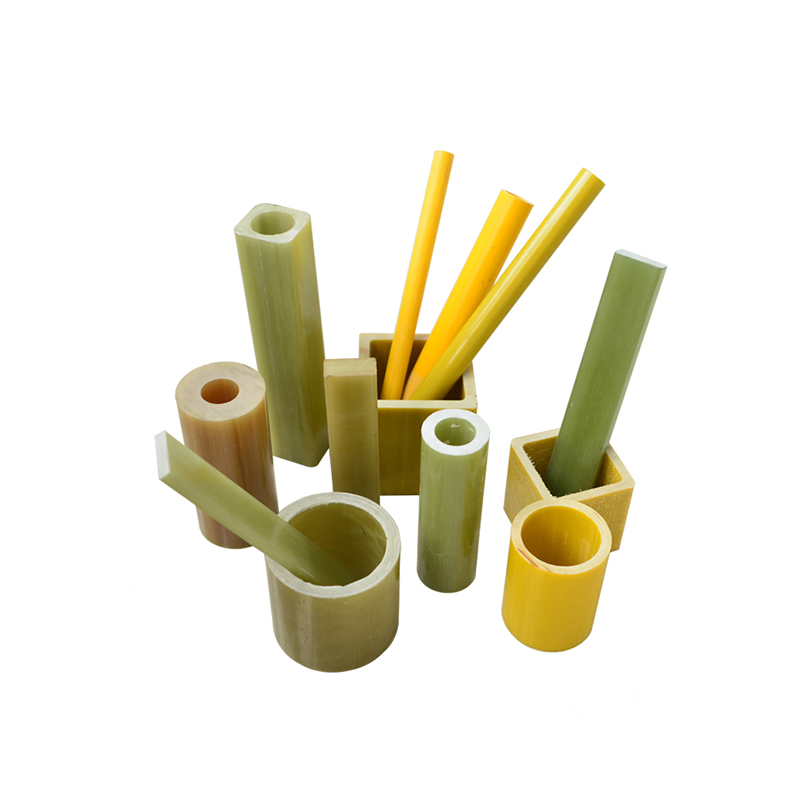
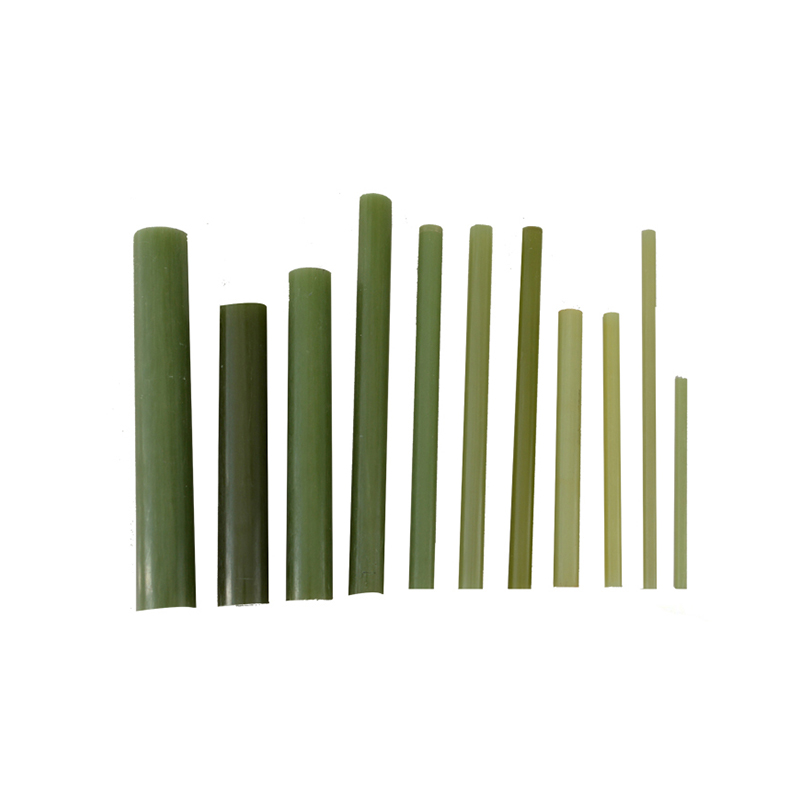
An epoxy core rod is a pultruded solid round profile. Continuous glass fiber — normally ECR or alkali-free E-glass — is pulled through an epoxy resin bath and then through a heated steel die, where the resin gels and cures before the profile is cut to length. Insulator-grade rods commonly run from 8 mm to 40 mm in diameter and up to 11 m in length, with glass content held at roughly 75–80% by weight.
Not every FRP rod is an epoxy core rod, and the difference decides what you can safely use it for:
If your application involves a crimped metal fitting or a silicone housing, you are buying the third grade whether or not the drawing says so.
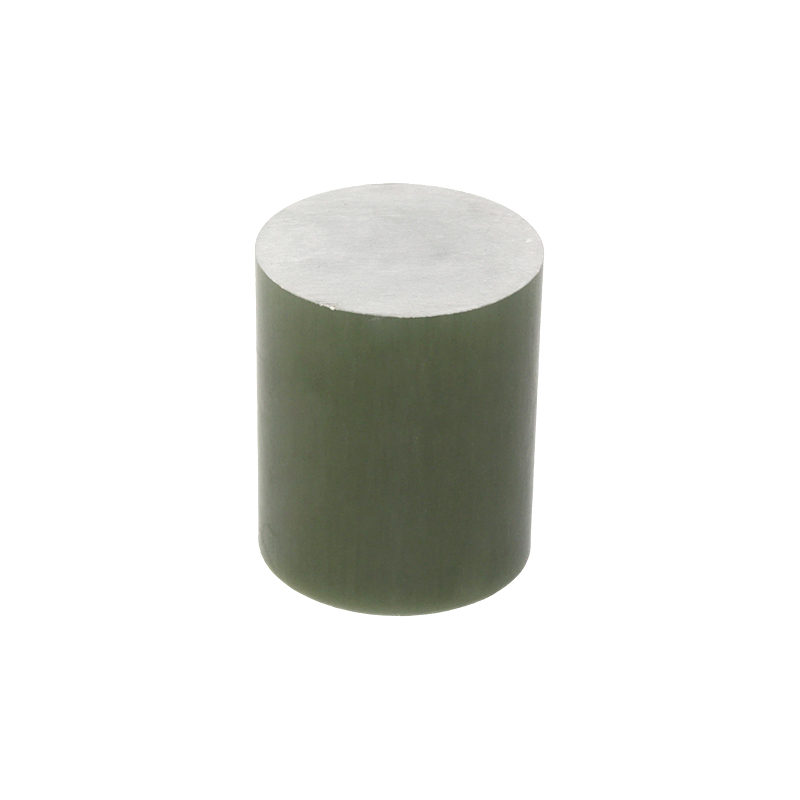 Pultruded Epoxy Fiberglass Rod for Insulator CoresHigh-fiber composite rod for internal support in composite insulators, arresters, fuses, and high-voltage equipment where dimensional tolerance and batch consistency matter.View Product →
Specify on measurable lines rather than on the phrase "per IEC 61109". A standard tells a supplier how to test; a specification tells them what to hold on every batch that leaves the die.
| Parameter | Insulator-grade target | Why it matters | How to verify |
|---|---|---|---|
| Glass content (by weight) | 75–80% | Low content cuts tensile and creep resistance; too high makes wet-out difficult and creates dry spots | Burn-off test on a sample from each batch |
| Diameter tolerance | ±0.1 mm for crimped cores, ±0.3 mm for general rods | Fitting bores are machined to a fixed size; oversize rods crack during crimping, undersize rods lose grip | Micrometer at five points: both ends and mid-length |
| Straightness (bow) | ≤1 mm per 1,000 mm | Bowed rods are hard to assemble into long strings and load the housing unevenly | Roll the rod on a flat table and measure the gap |
| Density and water absorption | 1.9–2.1 g/cm³; water uptake ≤0.1% | Voids and incomplete cure raise water uptake and shorten life in humid climates | Density measurement plus water diffusion test on samples |
| Tensile strength | ≥1,100 MPa | The core carries the full mechanical load; the silicone housing carries none of it | Full-section tensile test to failure |
| Dye penetration | 15 minutes, no penetration | Reveals surface cracks, voids and dry fiber that a visual check misses | Dye penetration test on cut ends and the full surface |
| Surface finish | Uniform resin, no dry fiber, no blisters or spiral marks | Spiral marks and resin-rich patches become stress raisers at the sheath interface | Visual inspection at 5× magnification |
Two of these lines cause more arguments than the rest: diameter tolerance and dye penetration. Both are cheap to check and expensive to discover late.
 Insulator Core Rod for Composite High-Voltage InsulatorsGlass-fiber-reinforced resin rod carrying mechanical load in composite insulators; diameter, fitting interface, and batch checks are critical for line reliability.View Product →
Tensile strength is quoted per unit area, but the number that decides whether a line stays up is load in kilonewtons. Because cross-section grows with the square of diameter, a small step up in rod size buys a large step up in capacity.
Values calculated for a solid circular section at 1,200 MPa ultimate tensile strength. Glass content, cure quality and fiber alignment can move the real figure by 10–15% in either direction.
This is why undersizing is such an expensive shortcut. Stepping from Ø18 mm to Ø20 mm adds about 11% to diameter and roughly 24% to breaking load, for a few percent more material cost. Going the other way — keeping Ø18 mm and accepting a lower glass content to save on resin — removes capacity you cannot see and cannot recover later.
Field complaints rarely begin at the glass fiber itself. They begin at the interface between rod, fitting and housing, and in process details that never appear on a datasheet.
An incoming inspection that catches most of this costs very little: five micrometer readings per rod, a dye penetration test on a 300 mm sample, a burn-off glass content check, and one full-section tensile test per shipment.
The core rod is the structural spine of the finished part; the housing, the shed profile and the end fittings are built around it. Main uses include:
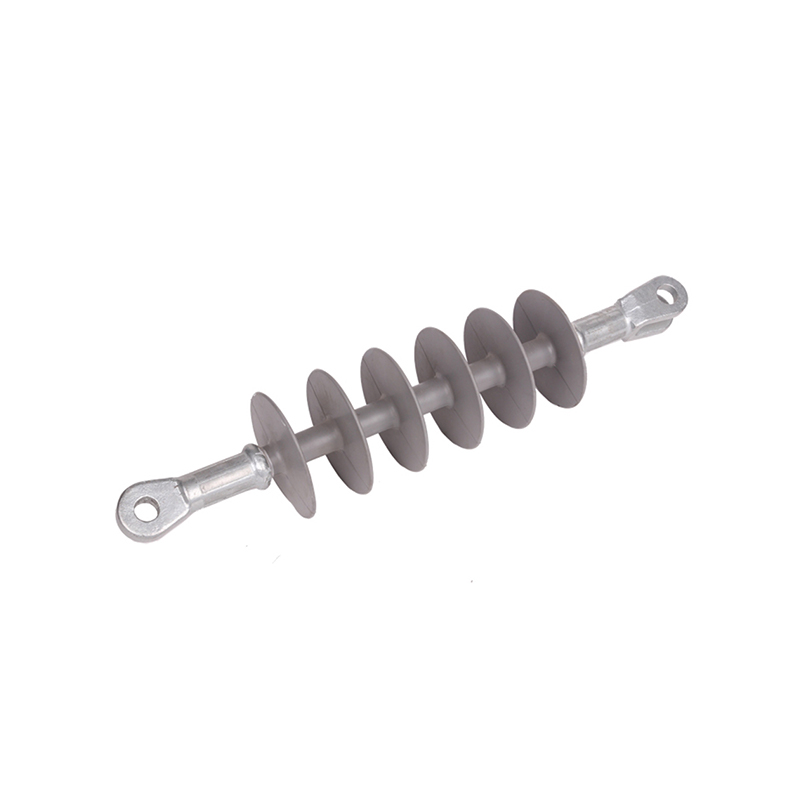 Composite Suspension Insulator for High-Voltage Transmission LinesLong-rod silicone rubber insulator with epoxy fiberglass core and crimped metal fittings, suited to polluted, high-tension, and long-span transmission applications.View Product →
Because the rod and the fitting must be engineered as one pair, suppliers who make both the core rod and the finished insulator are usually easier to work with. One party owns the tolerance stack, and a crimp failure cannot be blamed on the other side of the supply chain.
The first order tests the sample room. The second order tests the production line. Five items tell you which one you are dealing with:
Taizhou HuaDong Insulated Material Co., Ltd. is a useful example of what the second tier looks like in practice: FRP rod production since 1994, ISO 9001 certification in 2004, a documented tripartite inspection system with quality control holding veto power, and core rods supplied to insulator makers in markets including the United States, Germany, Romania, Russia, India, Vietnam and Kenya. Because the same factory also builds composite insulators, metal end fittings and cutout fuses, the rod-to-fitting tolerance is settled in-house instead of in an argument between two suppliers.
If you are comparing several rod profiles for a mixed order, this guide to how to choose the right FRP rod profiles is a reasonable place to start.
Paste these lines into the enquiry and most tolerance disputes disappear before the quotation stage.
The matrix. Fiberglass rod is a broad category that includes polyester and vinyl ester profiles; epoxy core rod uses an epoxy matrix with 75–80% glass content, giving higher tensile strength, better creep resistance and lower water uptake. If the rod carries mechanical load inside an insulator, epoxy is the specification you want.
For crimped cores, ±0.1 mm is normal practice, and ±0.05 mm is available for critical fittings. General-purpose rods are usually sold at ±0.3 mm or wider. The tolerance should be set by the fitting bore, not by what is convenient for the rod supplier.
Three checks cover most of the risk: micrometer readings at five points per rod, a fifteen-minute dye penetration test on a cut sample, and a visual inspection at 5× magnification. Send one sample per shipment out for full-section tensile testing if you have access to a testing house.
Yes. Epoxy and glass fiber degrade under direct sunlight, and the rod surface is not designed to act as the outdoor weather barrier. In service it sits inside a silicone or EPDM housing or inside a bushing body. For exposed outdoor use, a UV-resistant coating or a protective tube is required.
Epoxy core rods are one of the few components on a transmission or railway line where the cheapest option and the least expensive option are rarely the same thing. The rod that holds tolerance, passes a dye test and arrives with batch records costs a little more per kilogram and a great deal less per failed insulator.
Buy on measurable lines — glass content, diameter tolerance, straightness, water absorption and traceability. Then test the first shipment rather than trusting the certificate, and the second order will show you whether the process really matches the sample.
Contact Us

jszn@vip.163.com
jsthim@188.com

0086 523-88026699
0086 523-88665172



Quick Links
Product Categories
Message Us Now !