A composite insulator is an insulating component used in high-voltage equipment within power systems; it is primarily applied in high-voltage power infrastructure such as transmission lines, substations, and electrified railways. Its primary functions are to support conductors, provide electrical isolation, and prevent current leakage.
1. Structural Components A composite insulator primarily consists of three parts:
Sheds: Typically made of silicone rubber, the surface features multiple ring-shaped or disc-shaped structures arranged in an alternating pattern of large, medium, and small sizes, creating an umbrella-like appearance. This design effectively increases the creepage distance and enhances anti-pollution flashover performance. The surface of the sheds features textured patterns or grooves designed to enhance hydrophobicity and drainage capabilities.
Core Rod: Composed of acid-resistant and high-temperature-resistant epoxy fiberglass, the core rod serves as the insulator's primary load-bearing element, withstanding mechanical tensile forces. The core rod is characterized by its high strength, high elastic modulus, corrosion resistance, and aging resistance.
Metal Fittings: Typically made of hot-dip galvanized steel or stainless steel, with surfaces often treated with a rare-earth aluminum coating. These fittings are connected to the core rod using an advanced crimping process, ensuring a reliable connection and preventing detachment caused by stress concentration or corrosion.
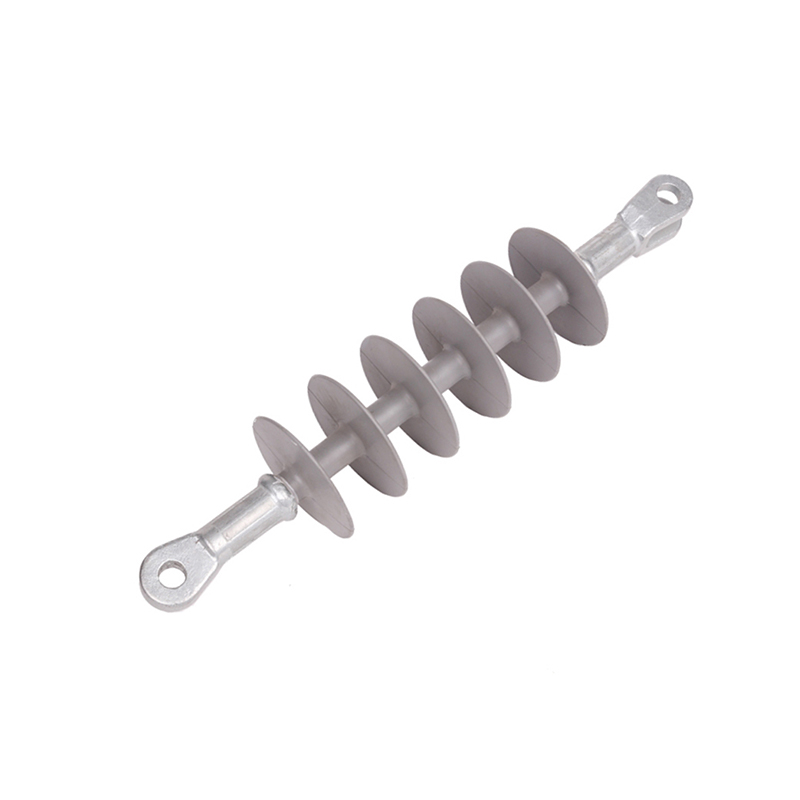
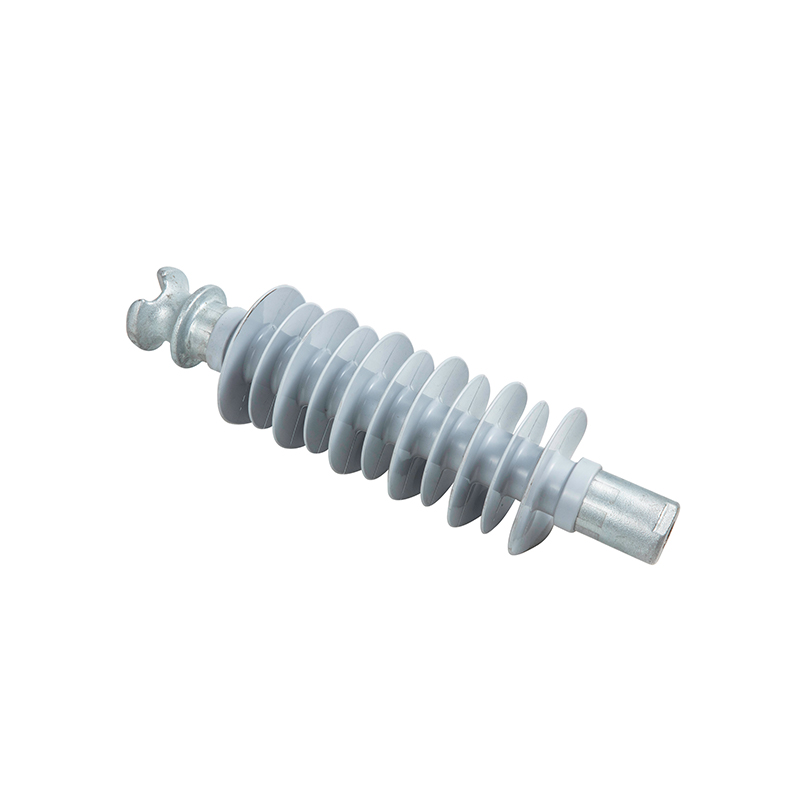
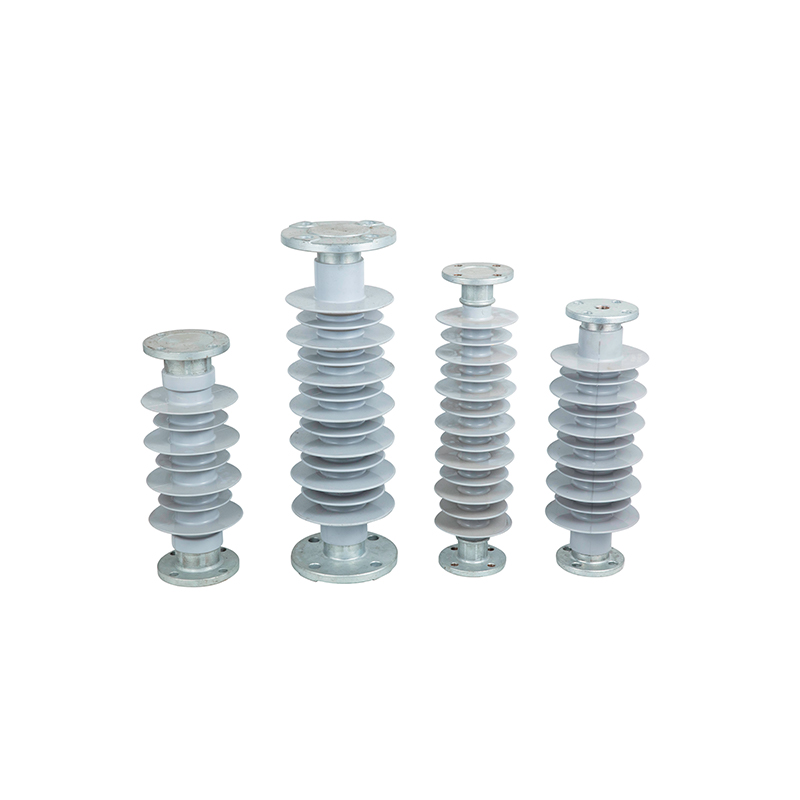
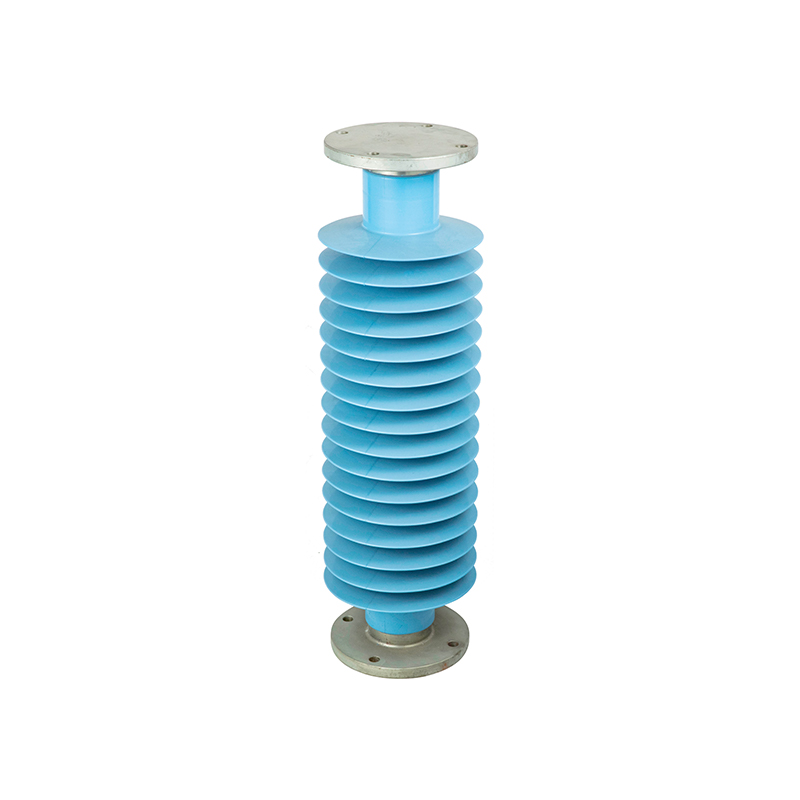
2. Appearance Characteristics The composite insulator generally presents a long, slender, or cylindrical shape, featuring metal connection components (fittings) at both ends and an insulating body in the middle. The sheds come in a variety of colors—including white, gray, red, purple, green, and others—where different colors may be used to distinguish voltage levels, manufacturers, or pollution resistance grades. Installation configurations vary, including suspension types (suspended from conductors or cross-arms) and post types (mounted vertically).
3. Core Performance Features Excellent Hydrophobicity: The silicone rubber sheds repel moisture, causing water to bead up on the surface rather than forming a continuous water film; this is a critical characteristic for preventing pollution flashover. Strong Anti-Pollution Flashover Capability: In polluted environments, it effectively prevents electrical arc discharge, maintaining performance even when the surface is contaminated. Superior Weather Resistance: Validated through rigorous testing—including 5,000-hour artificial aging tests and high-altitude simulations—the insulator demonstrates high reliability and a long service life during long-term operation.
4. Key Application Scenarios High-Voltage and Ultra-High-Voltage Transmission Lines: Suitable for voltage levels ranging from 10 kV to 500 kV and above; suspended from transmission towers to support and insulate conductors. Substation Equipment: Post-type composite insulators are used to support equipment such as busbars, circuit breakers, and disconnect switches. Railway Electrification Systems: Railway insulators are utilized within catenary systems to ensure the safe transmission of power. Specialized Environments: Particularly well-suited for harsh conditions, including high-altitude regions, coastal areas characterized by heavy pollution, high humidity, and salt fog, as well as regions prone to severe cold and freezing rain.
5. Advantages Over Traditional Insulators Compact size and lightweight design: Weighing only 1/7 to 1/10 the weight of equivalent porcelain insulators, facilitating ease of transport and installation. High mechanical strength: Features a high bending failure load and tensile strength. Convenient installation and maintenance: Simple structural design minimizes the risk of damage. Excellent aging resistance and long service life: Constructed using high-quality silicone rubber and an acid-resistant, high-temperature-resistant epoxy fiberglass core rod.
6. Manufacturing Process Highlights The sheds and the core rod are manufactured using an integral molding process, ensuring a void-free interface to prevent electric field concentration and partial discharge. The metal fittings are attached to the core rod using a crimping process, guaranteeing both mechanical strength and electrical continuity.
About Us
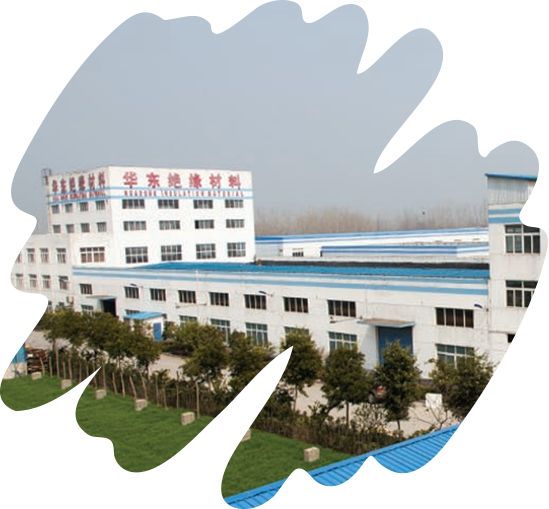
Taizhou HuaDong Insulated Material Co., Ltd.
As China Composite Insulator manufacturers and Composite Insulator factory, Taizhou HuaDong Insulated Material Co., Ltd (FORMER Yangzhou Dajieshi FRP products Co., Ltd), which was founded in October in 1994.
Our company is mainly engaged in the production of FRP ROD profiles, related terminal parts and accessory products. The terminal and accessories products such as various types of composite insulators, silicone rubber insulator fittings, line fittings and so on.The epoxy fiberglass core we produce as an intermediate connector and insulating parts is widely used in all fields and many kinds of composite insulator production. The profiles and composite insulators are widely used in electric power electronics and electrical railways. In the construction, automotive and environmental protection field IHIM products arewidely sales in North and South America.Africa.Asia. Europe ete such as USA.Kenya. Korea.India, Vietnam, Iran, Russia, Germany.Romania and other countries and vast areas in our country. THIIM is becoming a well-known supplier for insulation products field globally.
A composite insulator that fails in service rarely fails because the silicone housing was the wrong color. It fails because the fiberglass core inside it was selected, manufactured, or handled withou...
An overhead railway line is only as reliable as its least visible component. The railway insulator, often taken for granted, is the hard-working barrier that keeps high-voltage current in the catenar...
At 6:40 on a weekday morning, the 27.5 kV feeder inside a busy urban tunnel loses insulation. The pantograph drops, the train glides to a halt, and every service behind it stacks up. In most cases th...
For engineers and procurement teams comparing composite insulator options, the direct answer is this: for long span high voltage transmission lines rated between 10kV and 500kV, a composite suspensio...
Metal end fittings are the connecting, securing, and suspension hardware that hold insulators, conductors, and rails together across power transmission, distribution, and railway networks, and the ri...
A composite insulator is a core insulating component used across high voltage power systems, and it plays a central role wherever electrical isolation, conductor support, and leakage current control are required. It is applied throughout transmission lines, substations, and electrified railway networks, spanning voltage classes from 10 kV up to 500 kV and above. Because it combines silicone rubber sheds, a fiberglass core rod, and metal end fittings into a single load bearing unit, a composite insulator delivers both mechanical strength and long term electrical reliability in one product. Manufacturers such as Taizhou HuaDong Insulated Material Co., Ltd. supply this component to power utilities and infrastructure projects that need a lighter, more pollution resistant alternative to traditional ceramic hardware.
What a Composite Insulator Is Built From
Every composite insulator is assembled from three functional parts, and the performance of the finished unit depends on how well these parts work together. Taizhou HuaDong Insulated Material Co., Ltd. produces each of these elements as part of its own manufacturing chain rather than sourcing them separately, which keeps the interface between the core rod and the shed void free.
Sheds
Made of silicone rubber and arranged in alternating large, medium, and small discs to form an umbrella profile. This layout extends the creepage distance and improves anti pollution flashover behavior, while textured grooves on the shed surface support hydrophobicity and drainage.
Core Rod
An acid resistant, high temperature resistant epoxy fiberglass rod that carries the mechanical tensile load of the insulator. It is valued for high strength, a high elastic modulus, corrosion resistance, and long term aging resistance.
Metal Fittings
Hot dip galvanized steel or stainless steel end fittings, often finished with a rare earth aluminum coating, then crimped onto the core rod to prevent detachment from stress concentration or corrosion.
Product Range Offered by Taizhou HuaDong Insulated Material Co., Ltd.
Taizhou HuaDong Insulated Material Co., Ltd. manufactures four composite insulator types, each matched to a different point in a power network. The table below summarizes where each type is typically installed.
Product
Typical Installation
Composite Suspension Insulator
Suspended from conductors or cross-arms on transmission towers
Composite Pin Insulator
Mounted on a pin fitting, commonly used along distribution and lower voltage lines
Composite Post Insulator
Mounted vertically to support busbars, circuit breakers, and disconnect switches in substations
Railway Insulator
Installed within catenary systems for electrified railway power transmission
Sheds on these units are available in white, gray, red, purple, green, and other colors, which can be used to distinguish voltage levels, manufacturers, or pollution resistance grades. Both suspension type and post type installation configurations are covered across the range that Taizhou HuaDong Insulated Material Co., Ltd. produces.
Performance Characteristics That Matter in the Field
Hydrophobicity: the silicone rubber shed causes water to bead on the surface instead of forming a continuous film, which is a key defense against pollution flashover.
Anti pollution flashover capability: the insulator resists arc discharge in contaminated environments and keeps working even when the shed surface is dirty.
Weather resistance: validated through 5,000 hour artificial aging tests and high altitude simulation, supporting a long service life in continuous outdoor operation.
Where Composite Insulators Are Applied
The application range for this product runs from high voltage transmission down to specialized environments where standard ceramic hardware struggles. Taizhou HuaDong Insulated Material Co., Ltd. positions its composite insulator line across all of the following use cases.
Transmission Lines
Voltage levels from 10 kV to 500 kV and above, suspended from towers to support and insulate conductors.
Substations
Post type units support busbars, circuit breakers, and disconnect switches.
Electrified Railways
Railway insulators operate within catenary systems to keep power transmission safe.
Harsh Environments
High altitude regions, coastal areas with heavy pollution and salt fog, and zones with severe cold or freezing rain.
Composite Insulator Compared With Traditional Porcelain
One reason utilities are shifting toward the product line supplied by Taizhou HuaDong Insulated Material Co., Ltd. is the weight and handling advantage over porcelain hardware.
Factor
Composite Insulator
Weight
Only 1/7 to 1/10 the weight of an equivalent porcelain insulator
Mechanical strength
High bending failure load and tensile strength
Installation and maintenance
Simple structure lowers the risk of damage during handling
Aging resistance
Built from high quality silicone rubber and an acid resistant, heat resistant epoxy fiberglass core
Manufacturing Process
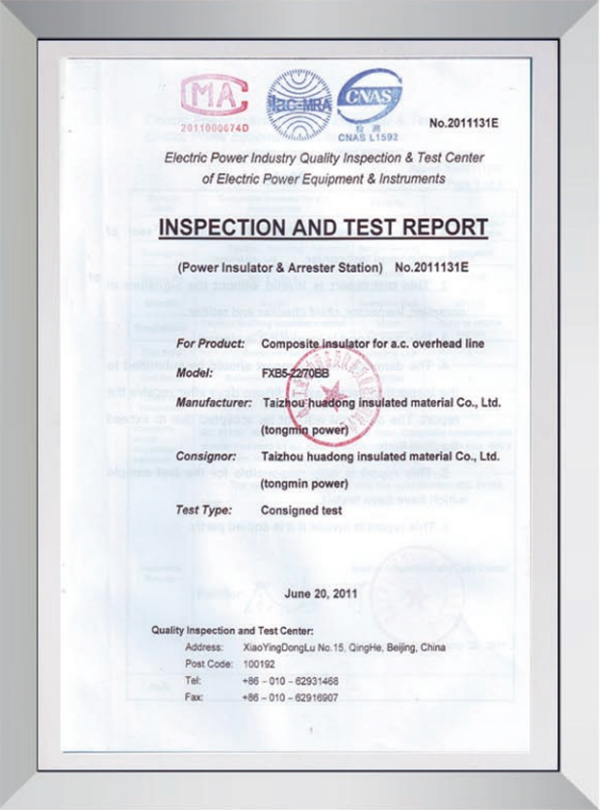
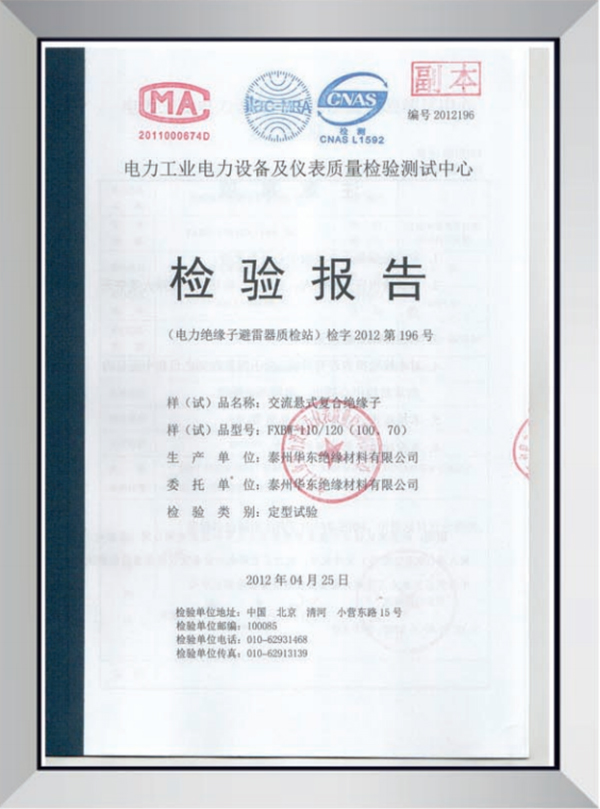
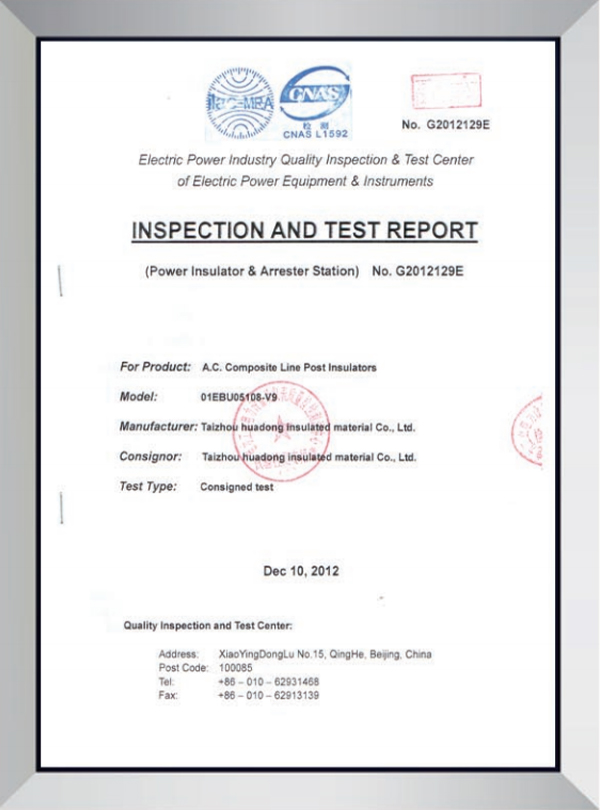
The shed and core rod are produced through an integral molding process, which keeps the interface void free and prevents electric field concentration or partial discharge inside the insulator. Metal fittings are then attached to the core rod with a crimping process that secures both mechanical strength and electrical continuity. This is the same process control that Taizhou HuaDong Insulated Material Co., Ltd. applies across its composite insulator, FRP rod, and metal end fitting production lines, since the company treats the fiberglass core as the connecting element shared across most of its insulation product range.
Frequently Asked Questions
What is the difference between a composite insulator and a porcelain insulator
A composite insulator weighs only 1/7 to 1/10 of an equivalent porcelain insulator, and it combines a silicone rubber shed with an epoxy fiberglass core rod instead of a solid ceramic body. This makes it lighter to transport and install while still providing a high bending failure load and tensile strength.
What voltage levels can a composite insulator be used for
Composite insulators are suitable for voltage levels ranging from 10 kV up to 500 kV and above, covering distribution lines, high voltage transmission lines, and ultra high voltage transmission lines.
What materials make up a composite insulator
The shed is silicone rubber, the core rod is acid resistant and high temperature resistant epoxy fiberglass, and the end fittings are hot dip galvanized steel or stainless steel, often finished with a rare earth aluminum coating.
Which type of composite insulator fits my project
Suspension insulators are used where the unit hangs from a conductor or cross-arm, pin insulators are used on pin mounted fittings, post insulators are mounted vertically to support substation equipment such as busbars and switches, and railway insulators are built for catenary systems on electrified rail lines.
How is the durability of a composite insulator verified
Durability is validated through testing such as 5,000 hour artificial aging tests and high altitude simulation, which are used to confirm reliability and long service life under continuous outdoor exposure.
Does the shed color of a composite insulator mean anything
Shed colors such as white, gray, red, purple, and green can be used to distinguish voltage levels, manufacturers, or pollution resistance grades, depending on the project specification.