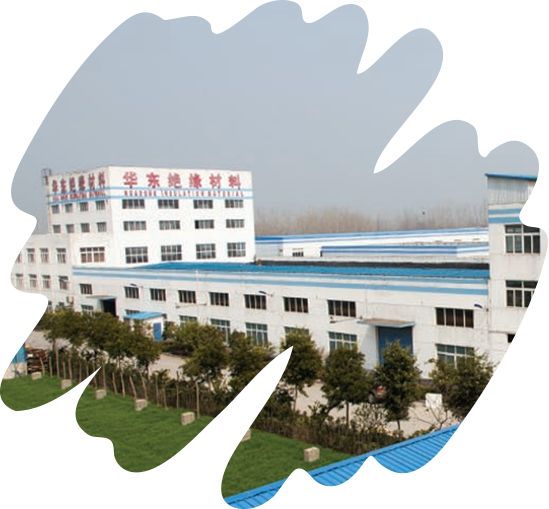
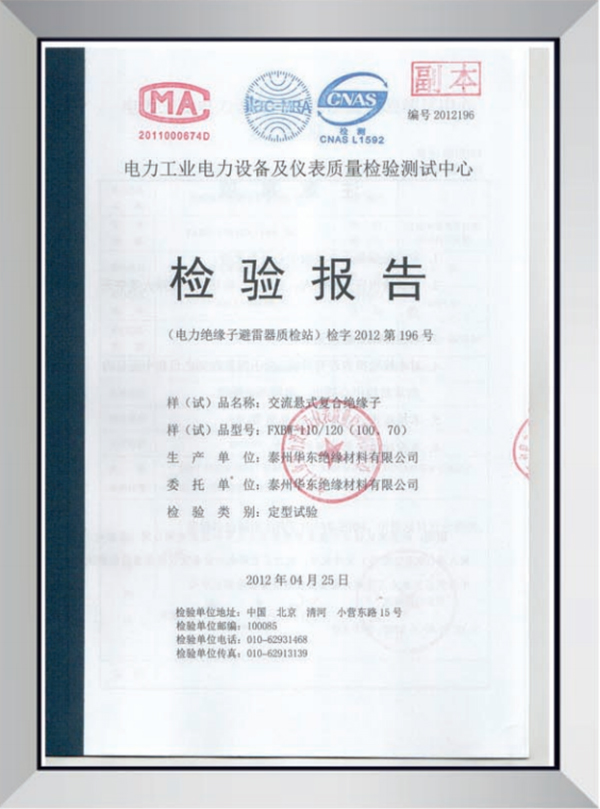
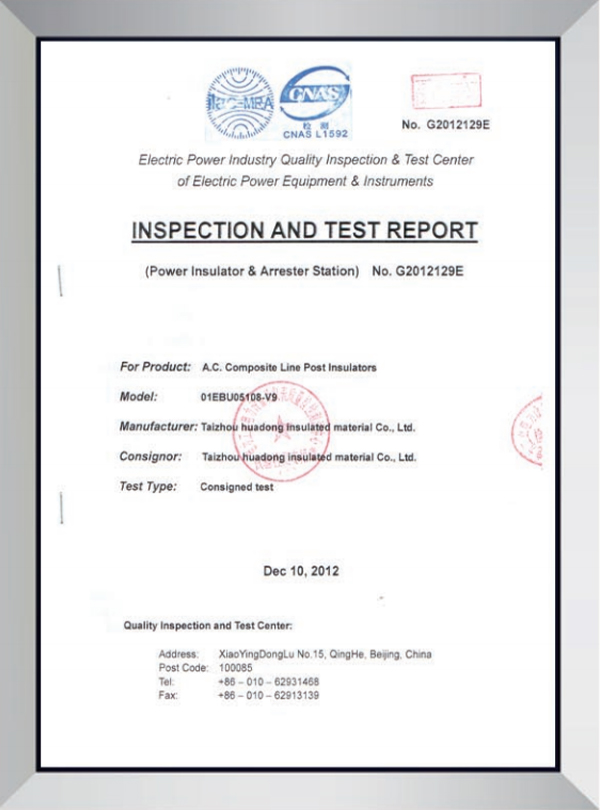
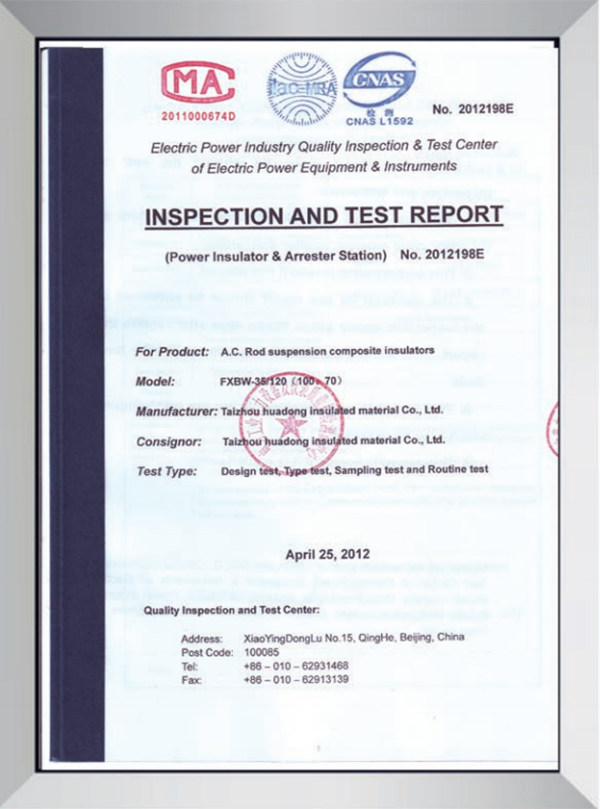
As China insulation products supplier and insulation and accessory products factory, Taizhou HuaDong Insulated Material Co., Ltd (FORMER Yangzhou Dajieshi FRP products Co., Ltd), which was founded in October in 1994.
Our company is mainly engaged in the production of FRP ROD profiles, related terminal parts and accessory products. The terminal and accessories products such as various types of composite insulators, silicone rubber insulator fittings, line fittings and so on.The epoxy fiberglass core we produce as an intermediate connector and insulating parts is widely used in all fields and many kinds of composite insulator production. The profiles and composite insulators are widely used in electric power electronics and electrical railways. In the construction, automotive and environmental protection field IHIM products arewidely sales in North and South America.Africa.Asia. Europe ete such as USA.Kenya. Korea.India, Vietnam, Iran, Russia, Germany.Romania and other countries and vast areas in our country. THIIM is becoming a well-known supplier for insulation products field globally.
A composite insulator that fails in service rarely fails because the silicone housing was the wrong color. It fails because the fiberglass core inside it was selected, manufactured, or handled withou...
An overhead railway line is only as reliable as its least visible component. The railway insulator, often taken for granted, is the hard-working barrier that keeps high-voltage current in the catenar...
At 6:40 on a weekday morning, the 27.5 kV feeder inside a busy urban tunnel loses insulation. The pantograph drops, the train glides to a halt, and every service behind it stacks up. In most cases th...
For engineers and procurement teams comparing composite insulator options, the direct answer is this: for long span high voltage transmission lines rated between 10kV and 500kV, a composite suspensio...
Metal end fittings are the connecting, securing, and suspension hardware that hold insulators, conductors, and rails together across power transmission, distribution, and railway networks, and the ri...
Insulation and accessory products are the physical link between a power line and the towers, cross-arms and switchgear that carry it, converting fiberglass, silicone rubber and galvanized steel into components that must hold mechanical load and stop current leakage at the same time. The category covers everything from the epoxy fiberglass rod hidden inside an insulator to the metal fitting that hangs it from a tower and the fuse that protects the transformer downstream. Taizhou HuaDong Insulated Material Co., Ltd, founded in October 1994 in Jiangyan district, Taizhou city, Jiangsu province, manufactures this full chain of insulation products in one factory, which is why utility buyers researching insulation and accessory products for a transmission, distribution or railway electrification project often use HuaDong as a single-source reference point.
FRP Rod: The Load-Bearing Core
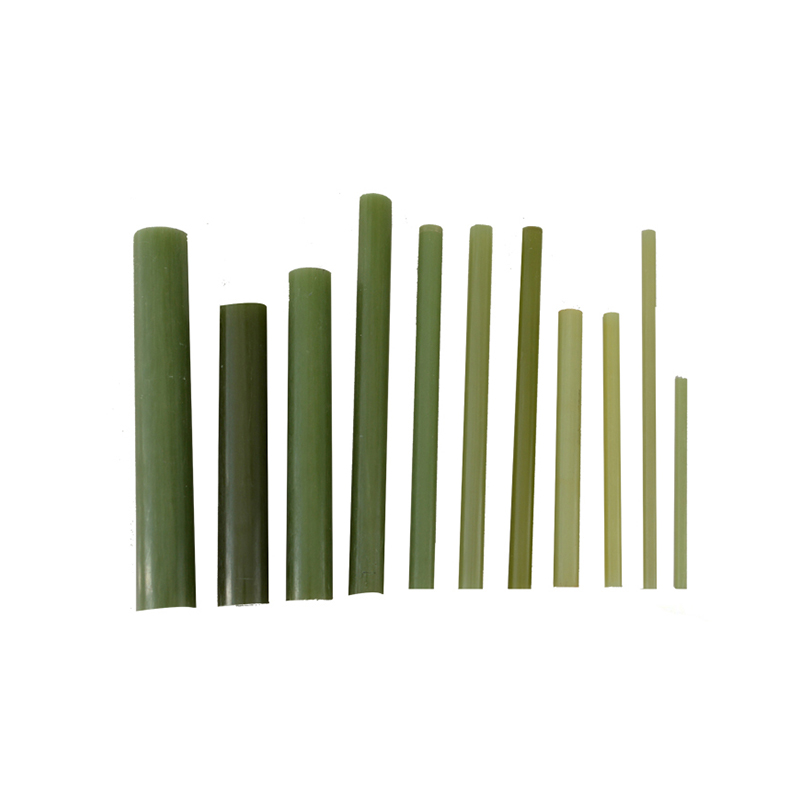
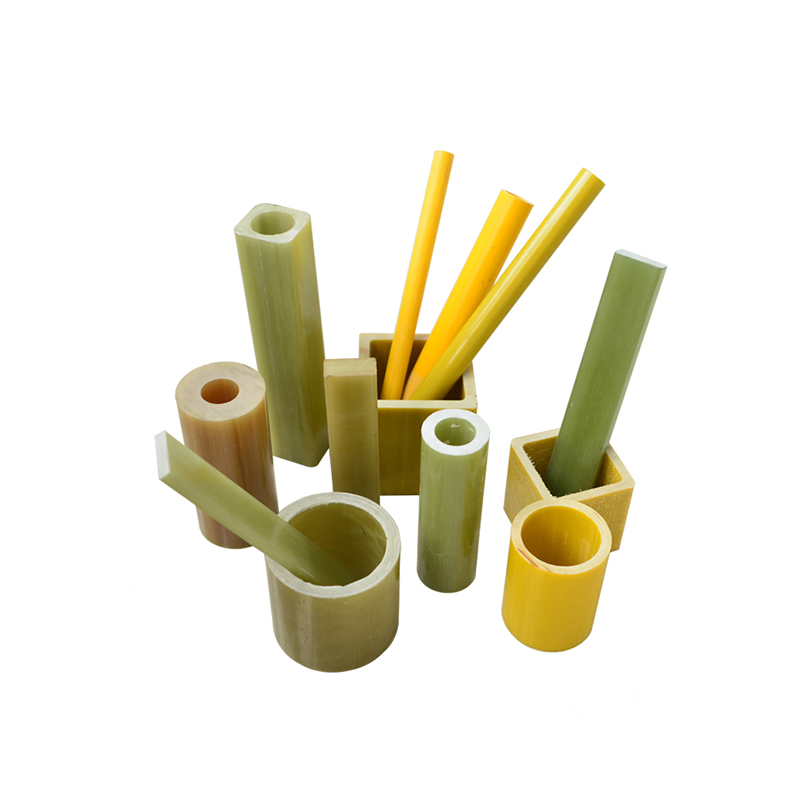
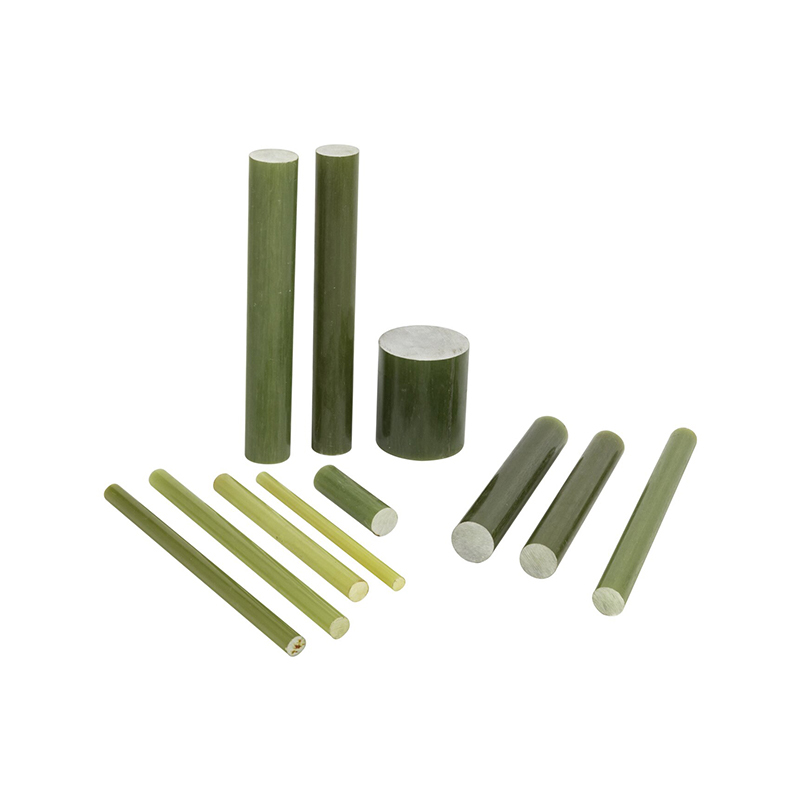
FRP rod is the epoxy glass fiber core rod that sits inside a composite insulator, made by a pultrusion or molding process using epoxy resin as the matrix material and glass fiber as the reinforcing material. It is also the product Taizhou HuaDong was originally built on: the company, founded in October 1994 in Jiangyan district, Taizhou city, Jiangsu province, traded for years as Yangzhou Dajieshi FRP Products Co., Ltd before adopting its current name, and FRP rod profiles remain its core manufacturing line today. In the rods produced by the company, glass fiber content usually reaches more than 80 percent of the composite, with epoxy resin serving as the matrix that wraps the fibers, giving the rod anisotropic behavior in which axial strength is much higher than radial strength. The surface is smooth and flat with a matte or semi-glossy texture, and common colors are green or yellowish. The rod can be sawn, milled, planed, drilled and turned, and internal threads can be tapped while external threads can be ground, which lets downstream insulator and switch producers machine the profile to their own end-fitting design.
Under the FRP Rod line, Taizhou HuaDong lists three product entries:
Insulator core rod — the load-bearing rod used as the internal support structure inside composite insulators.
Epoxy rod — the epoxy resin matrix profile used as an intermediate connector and insulating part.
Fiberglass rod — the glass-fiber-reinforced profile supplied as raw stock for further processing.
The rod is used as the internal support of rod-type suspension composite insulators, pillar composite insulators, cross-arm composite insulators, drop switch composite insulators, isolating switches, windproof composite insulators and interphase spacer rod composite insulators, as well as in electrified railway contact networks. Alongside the rod line, the company also produces a Filament Winding Tube under its Winding Tube category, a tubular FRP profile that complements the solid rod range for applications that call for a hollow insulating section rather than a solid core.
Composite Insulators for Power and Rail Networks
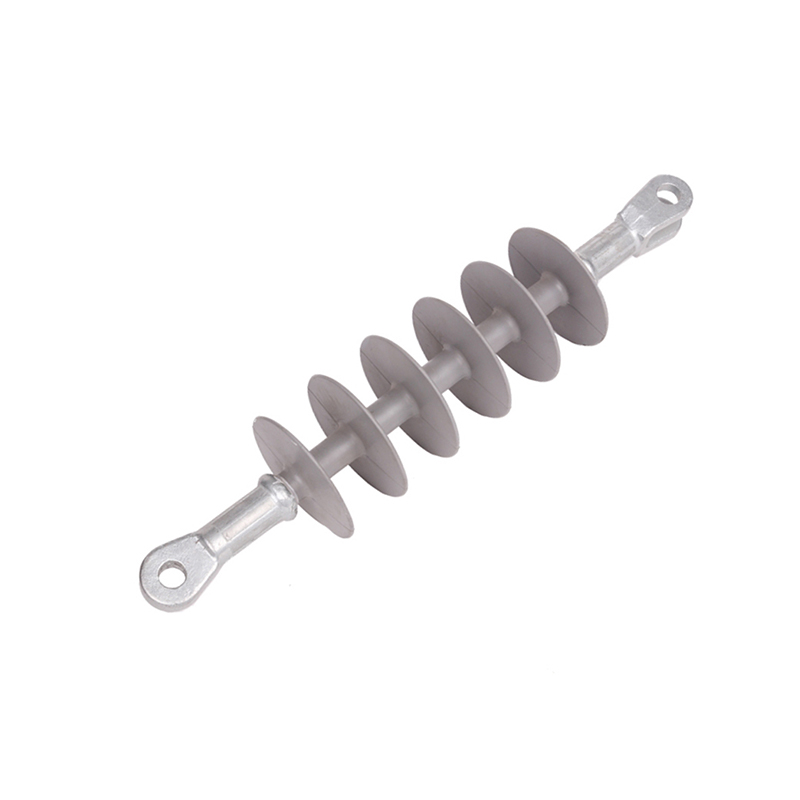
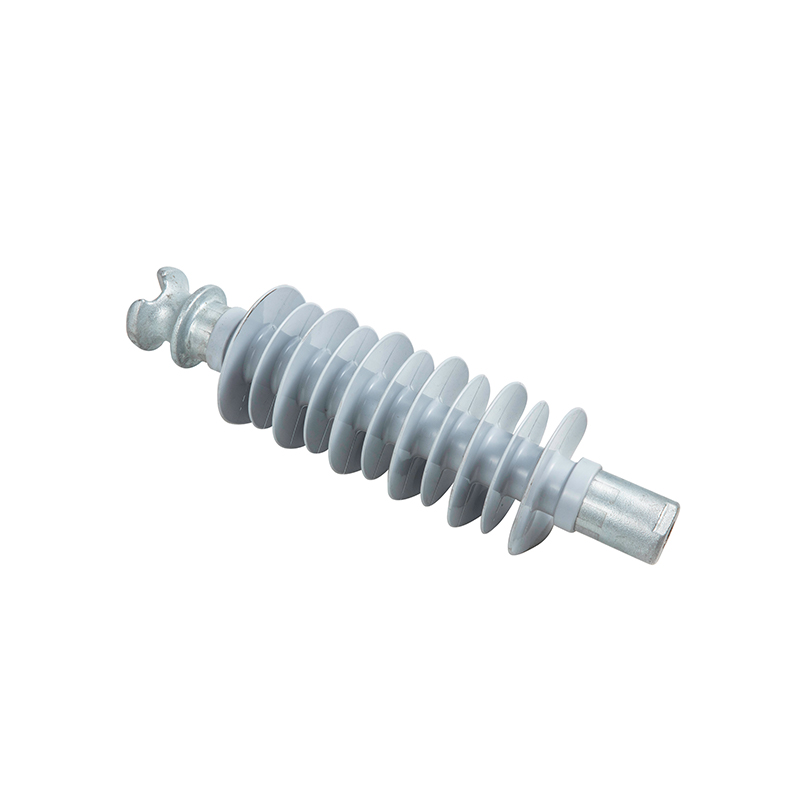
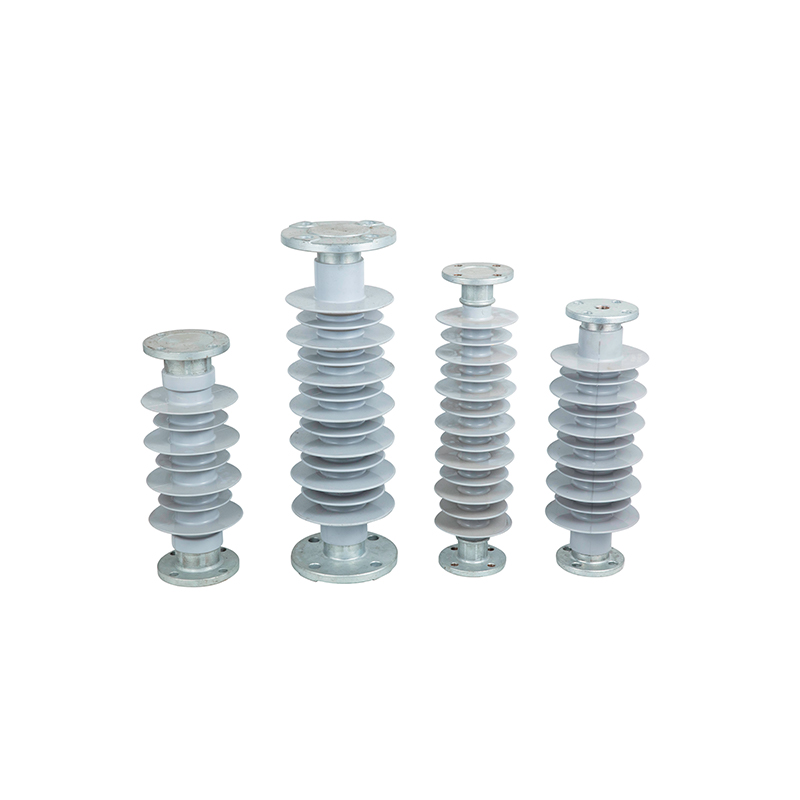
A composite insulator supports conductors, provides electrical isolation and prevents current leakage in high-voltage equipment, and it is built from three parts: silicone rubber sheds arranged in alternating large, medium and small ring shapes to increase creepage distance, an acid-resistant and high-temperature-resistant epoxy fiberglass core rod that carries the mechanical tensile load, and metal fittings in hot-dip galvanized steel or stainless steel, often with a rare-earth aluminum coating, crimped onto the rod. Compared with porcelain insulators, a composite insulator weighs only 1/7 to 1/10 as much, which reduces transport and installation cost on long line sections, and the design is validated through testing that includes a 5,000-hour artificial aging test and high-altitude simulation. It is suited to voltage levels from 10 kV up to 500 kV and above, and this is the product group Taizhou HuaDong points to when it states that its insulation and accessory products meet IEC 61109, GB/T 19519, JB/T 8460 and other related standard requirements.
Product
Typical mounting
Primary application
Composite Suspension Insulator
Suspended from conductors or cross-arms
High-voltage and ultra-high-voltage transmission lines
Because the sheds and the core rod are manufactured using an integral molding process, the interface between them is void-free, which helps prevent electric field concentration and partial discharge, while the metal fittings are attached by crimping to keep mechanical strength and electrical continuity intact along the whole insulator length. This is also why the company positions itself as being particularly suited to harsh conditions such as high-altitude regions, coastal areas with heavy pollution, high humidity, salt fog, and severe cold or freezing rain.
Metal End Fittings
Metal end fittings connect, secure and suspend insulators in relation to conductors, towers and poles, and some designs also help equalize voltage distribution and provide lightning protection. Taizhou HuaDong lists three fitting groups on its product line: Insulator Fittings, Power Fittings and Railway Fittings. Common fitting types include ball-and-socket fittings, clevis fittings, right-angle plates, connecting rings, U-bolts, single and double-ear plates, tension clamps and parallel-groove splicing clamps. The main materials are hot-dip galvanized steel, aluminum alloy and stainless steel, with titanium alloy reserved for specialized environments, and the standard corrosion protection is hot-dip galvanizing for outdoor use in humid or salt-spray conditions. Fittings are produced by casting, forging or crimping, and are quality-checked through dimensional inspection, galvanizing layer thickness measurement, hardness testing and tensile testing before they leave the factory.
Cutout Fuse
A cutout fuse is an overcurrent protection device that relies on an internal fusible element to melt under high temperature when an overload or short circuit occurs, automatically interrupting the circuit and protecting downstream equipment. The fuse tube houses a metal fuse link made of silver, copper or alloy material, enclosed in an insulating casing of epoxy resin or ceramic, while the skirted insulator body around it provides electrical insulation and mechanical support in either ceramic or composite material such as silicone rubber. After a fuse blows, the tube drops visibly, driven by internal pressure change or gravity, so maintenance crews can identify the fault location quickly, a feature especially useful on outdoor overhead line networks. Common voltage ratings for the fuses in this product line are 10 kV, 24 kV and 35 kV, protecting assets such as distribution transformers, power cables and capacitor banks. On the website, the Cutout Fuse category currently lists 24KV Cutout Fuse and 35KV Cutout Fuse models.
Why Buyers Source the Full Range From One Factory
Ordering FRP rod, winding tube, composite insulators, metal end fittings and cutout fuses from separate mills means matching tolerances and finishes across suppliers, and it is one reason overhead line contractors increasingly look for a single insulation and accessory products supplier. Because Taizhou HuaDong produces the epoxy fiberglass core rod in house and then carries it through to finished composite insulators and matching fittings, the interface between the rod and the crimped metal end can be controlled inside one production chain rather than reconciled between vendors after the fact. The company also offers custom services for buyers who need dimensions, fittings or packaging adapted to a specific tower design or import requirement, which is a common request from the power, railway and construction sectors it already serves across North and South America, Africa, Asia and Europe, including buyers in the USA, Kenya, Korea, India, Vietnam, Iran, Russia, Germany and Romania.
Frequently Asked Questions
How much lighter is a composite insulator than a porcelain one
A composite insulator weighs only 1/7 to 1/10 of an equivalent porcelain insulator, which reduces transport weight and makes installation on towers and cross-arms easier for line crews.
What is the difference between the insulator core rod, epoxy rod and fiberglass rod
All three sit under the FRP Rod category and share the same epoxy resin and glass fiber composition, with glass fiber content above 80 percent. The insulator core rod is positioned for use as the internal support of composite insulators, the epoxy rod is described as an intermediate connector and insulating part, and the fiberglass rod is the general reinforced profile supplied for further processing.
What voltage levels do the cutout fuses cover
The cutout fuse line covers common medium-voltage ratings of 10 kV, 24 kV and 35 kV, with 24KV Cutout Fuse and 35KV Cutout Fuse listed as current product models, used to protect distribution transformers, power cables and capacitor banks.
What materials are the metal end fittings made from
Fittings are mainly manufactured from hot-dip galvanized steel, aluminum alloy or stainless steel, with titanium alloy used in certain specialized environments. Hot-dip galvanizing is the standard surface treatment for outdoor humidity and salt-spray resistance.
What voltage range do the composite insulators support
The composite insulators are suited to voltage levels from 10 kV up to 500 kV and above, covering suspension use on transmission towers, post-type use in substations, and railway insulators in catenary systems.
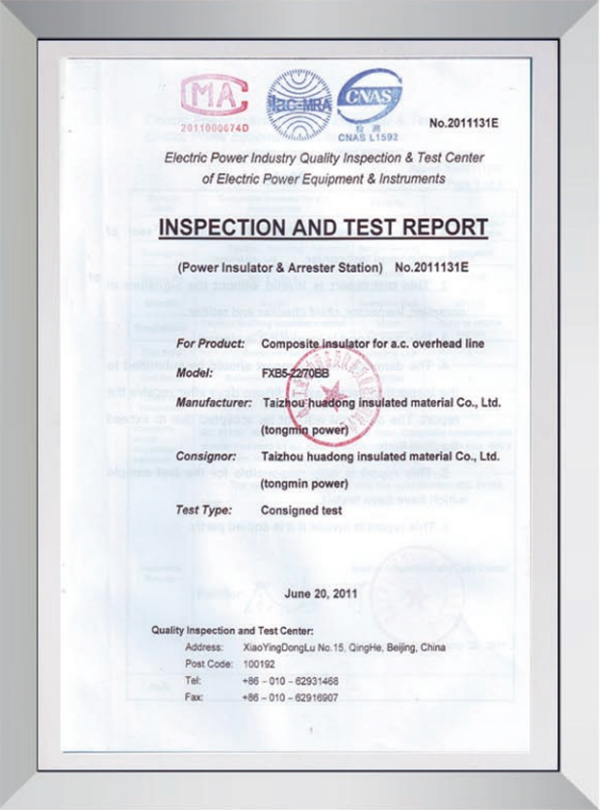
Which standards does Taizhou HuaDong reference for its products
The company states that its insulation and accessory products meet IEC 61109, GB/T 19519, JB/T 8460 and other related standard requirements.