Industry News

Home / News / Industry News / How to Choose the Right FRP ROD Profiles?

How to Choose the Right FRP ROD Profiles?

FRP ROD is the fastest way to get long-term mechanical strength and electrical insulation into a power system component, and choosing the right FRP ROD profiles comes down to matching the fiber content, surface finish and end-machining of the rod to the load and voltage level it will carry. FRP ROD mainly refers to the epoxy glass fiber core rod, a cylindrical rod made by pultrusion or molding using epoxy resin as the matrix material and glass fiber as the reinforcing material. Taizhou HuaDong Insulated Material Co., Ltd manufactures three distinct FRP ROD profiles from its Jiangsu facility, and this guide walks through how to choose between them, how they compare to older insulation materials, where each one is used, and what shapes FRP ROD price when you request a quotation.

80%+ Glass fiber content in the core structure
30 yrs Service life of the insulator core rod
110-1000kV Voltage range covered by FRP ROD applications
01

How to Choose the Right FRP ROD for Your Power System Project

The starting point for choosing FRP ROD profiles is the material composition. The core structure is a composite material with continuous fibers arranged in an oriented direction, where glass fiber content usually reaches more than 80 percent while epoxy resin serves as the matrix that wraps the fibers. This structure gives the rod anisotropic characteristics, meaning axial strength runs much higher than radial strength, so the orientation of the rod in your assembly matters as much as its diameter.

Beyond fiber content, match the rod to your load and environment using its performance characteristics. Taizhou HuaDong lists shock absorption and fatigue resistance for cyclic loads and vibration, creep resistance and fracture resistance so the rod does not deform or break under long-term load, high temperature resistance for elevated-temperature environments, stress corrosion resistance for complex stress conditions, insulating properties from high volume resistivity and high breakdown voltage, and mechanical properties strong enough to withstand sawing, milling, planing, drilling and turning.

If your project requires internal threads or ground metal fittings, confirm processing performance early. FRP ROD profiles can be tapped with a tap for internal threads and ground for external threads, so the rod can be machined to match steel caps and flanges rather than forcing a compromise on the metal end fitting design.

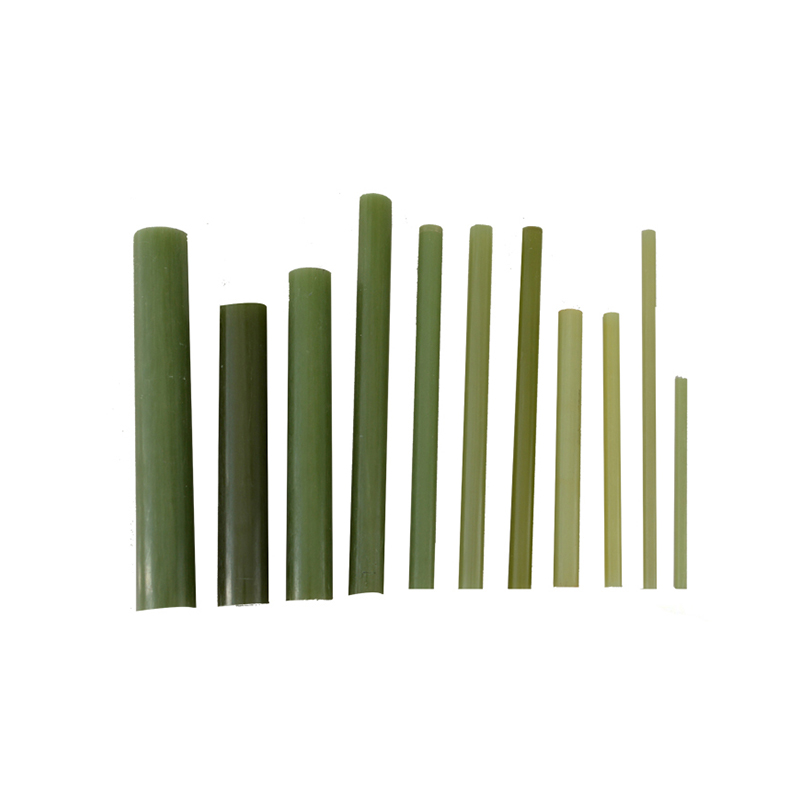
Appearance is a useful sanity check once you have narrowed the specification. Fiber-reinforced composite plastic rods are cylindrical rods with smooth and flat surfaces and a matte or semi-glossy texture, and common colors include green or yellowish tones. If a sample arrives with a rough, uneven surface or an inconsistent color band along its length, that is usually a sign of an inconsistent pultrusion run rather than a cosmetic-only issue, since the same process that shapes the rod's surface also determines how evenly the resin has bonded to the glass fiber underneath.

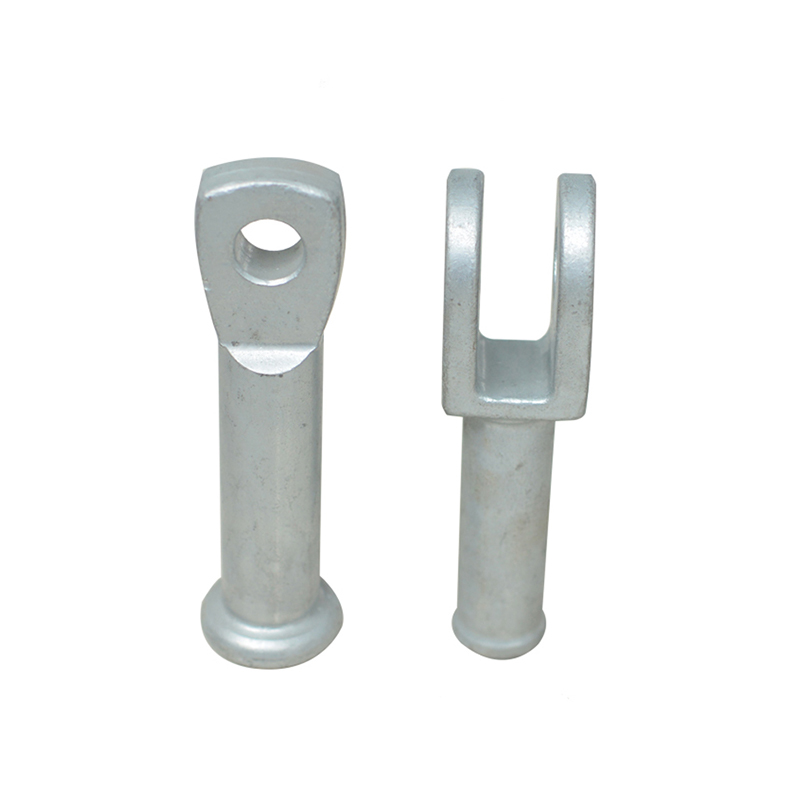
Length and diameter should be confirmed against the voltage level and mechanical duty of the fitting the rod will sit inside. Because the length and diameter of the core rod vary according to the voltage level of the insulator and the environment in which it is used, such as transmission lines or substations, two rods that look identical on a shelf can be built to different modular and standardized designs underneath, adapted to different voltage levels. Some mandrels also carry metal connectors or reserved holes at both ends for connection with metal accessories, so it is worth confirming end preparation alongside the core specification rather than treating it as an afterthought.

02

FRP ROD vs Traditional Insulation Materials: Which Delivers Better Long-Term Performance

FRP ROD profiles outperform older insulation materials on service life and weight, which is why composite insulators built around them have steadily replaced porcelain and glass in new transmission line projects. The insulator core rod supplied by Taizhou HuaDong has excellent weather resistance and anti-aging properties, and its service life can be as long as 30 years, far exceeding traditional porcelain or glass insulators.

That durability comes from the same properties covered above: the rod resists corrosion damage even under complex stress, keeps its mechanical strength at higher temperatures, and does not absorb enough moisture to degrade its insulating performance. For buyers comparing FRP ROD against porcelain or glass on a like-for-like basis, the practical difference shows up in fewer replacement cycles across the operating life of a transmission line or substation.

Insulator Core Rod vs Epoxy Rod vs Fiberglass Rod: What Sets Each FRP ROD Type Apart

Taizhou HuaDong groups its FRP ROD profiles into three named products, and while they share the same glass fiber and resin foundation, each is built and finished differently for its role in the field.

Product Defining Role Where It Is Used
Insulator Core Rod The core component of a composite insulator, positioned at its center as the main mechanical load-bearing part, combined with an outer silicone rubber sheath and metal accessories such as steel caps and flanges. Suspension insulators bearing tensile force and pillar insulators bearing pressure or bending force across power systems.
Epoxy Rod Full name Epoxy Fiberglass Rod, also called insulator core rod, manufactured through the pultrusion process with high processing accuracy and strict dimensional tolerance control for precision assembly. Composite insulators, arrester core rods and fuse core rods, plus insulating supports in high-voltage switches, transformers and cable terminals.
Fiberglass Rod A Fiberglass Reinforced Plastic profile compounded through winding, pultrusion or molding, available in cylindrical form as well as square or custom profiles. Industrial structural components, electrical insulation materials, chemical anti-corrosion equipment, architecture and decoration, and rail transit parts.

Explore the FRP ROD Product Range

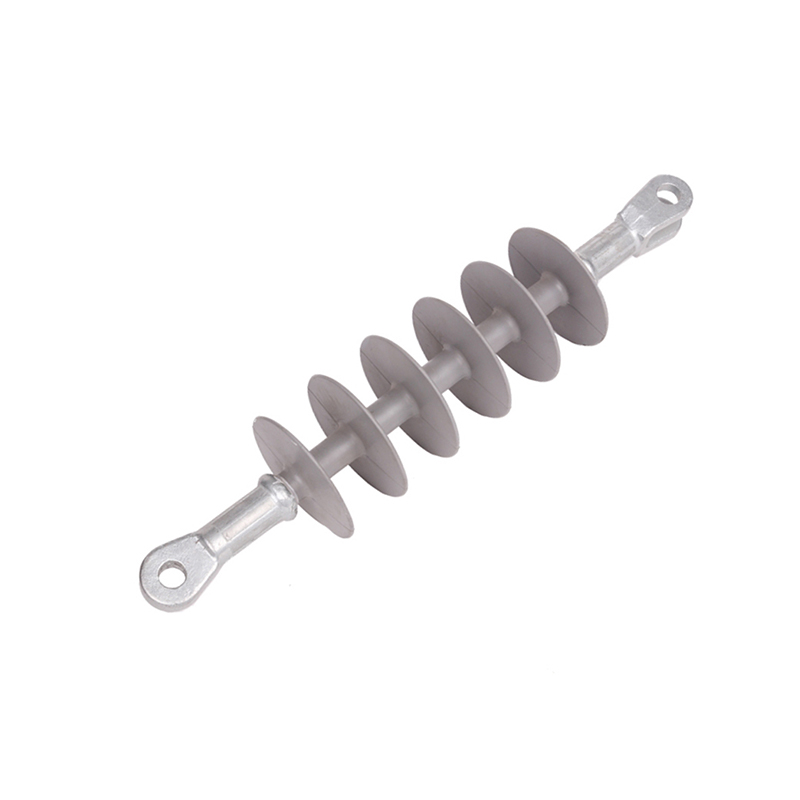
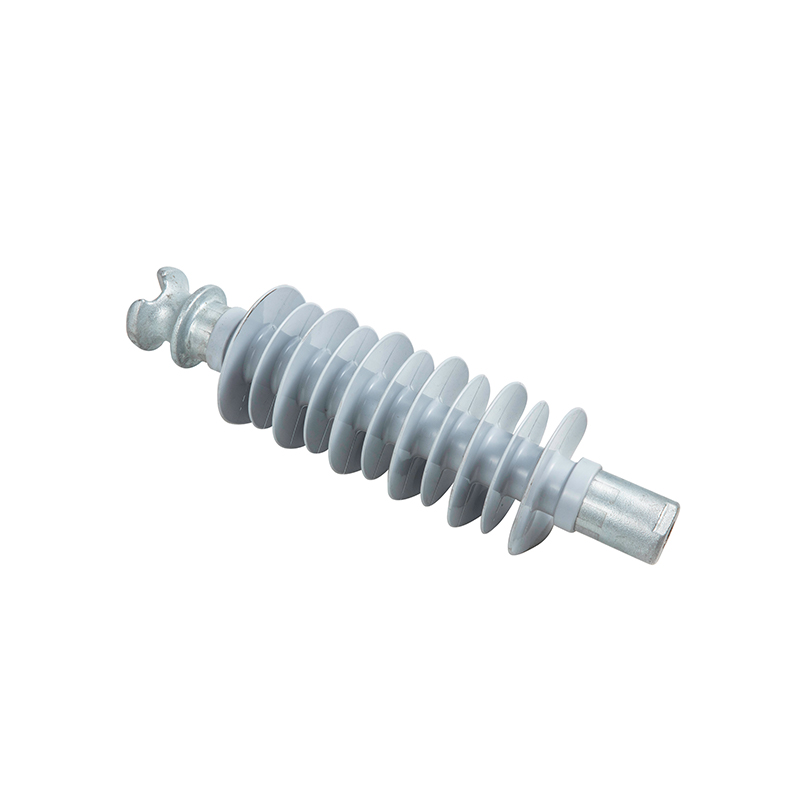
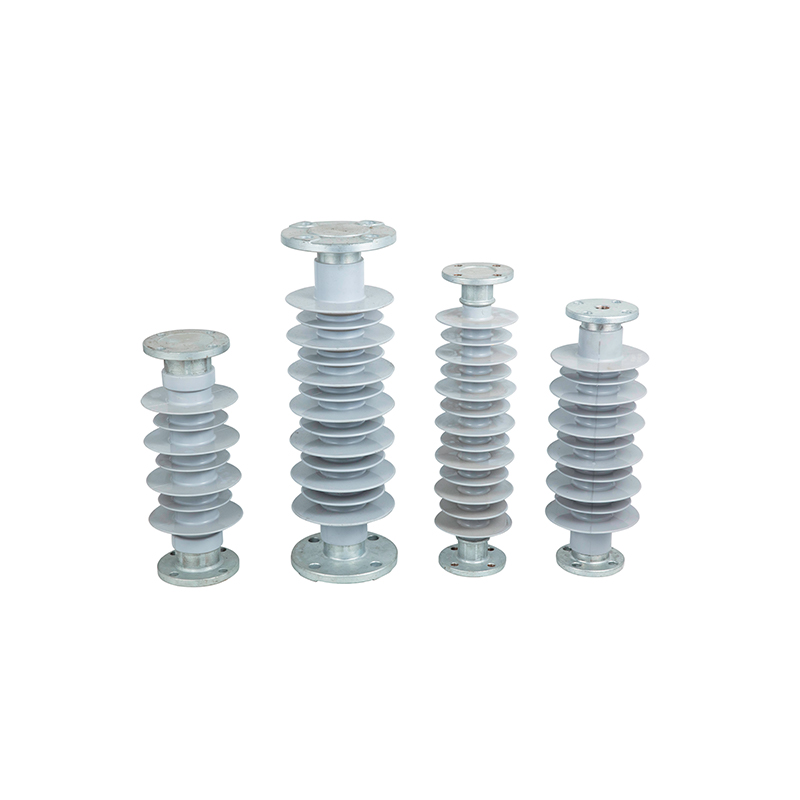
Every profile shown below is manufactured by Taizhou HuaDong Insulated Material Co., Ltd as part of its FRP ROD line, ready for custom sizing and wholesale supply.

03

Which FRP ROD Profiles Are Best Suited for High-Voltage and Railway Applications

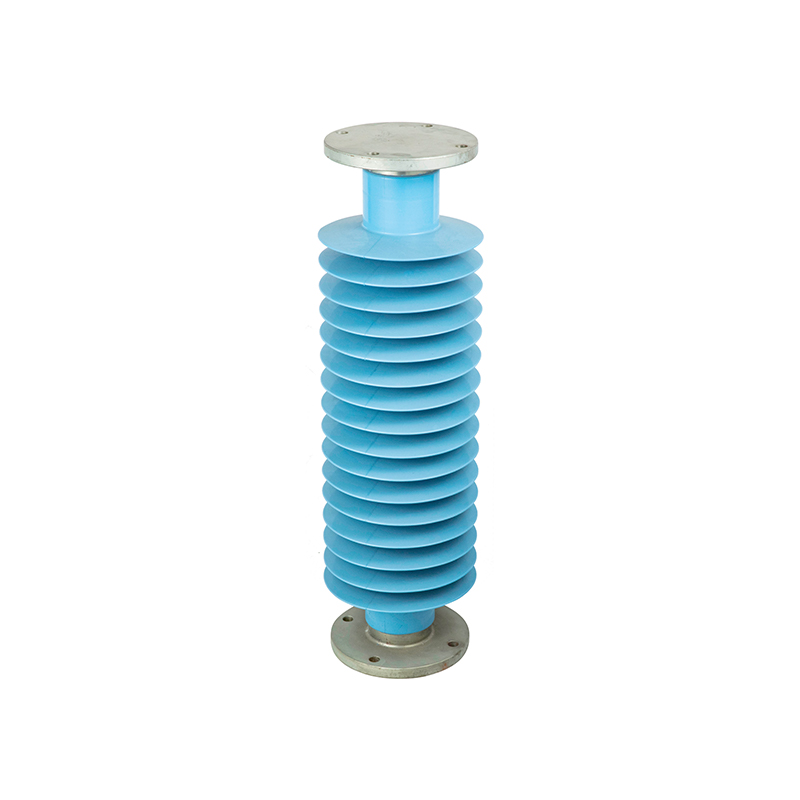
FRP ROD profiles are widely used in high-voltage and ultra-high voltage transmission lines, including voltage levels of 110kV, 220kV, 500kV and 1000kV ultra-high voltage. Within substation equipment they appear as pillar insulators, bushings and isolation switch insulators, and across the broader composite insulator family they serve as the internal support for rod-type suspension composite insulators, pillar composite insulators, cross-arm composite insulators, drop switch composite insulators, isolating switches, windproof composite insulators and interphase spacer rod composite insulators.

Electrified railway contact networks are a named application area as well, alongside wind power generation and rail transit traction power supply systems. Taizhou HuaDong also notes that FRP ROD profiles hold up in harsh environmental areas such as coastal regions, high pollution zones, high humidity locations and high altitude sites, which is exactly the combination of conditions that pushes buyers away from porcelain toward composite insulator cores in the first place.

For buyers weighing which profile fits a given installation, the pattern that emerges from Taizhou HuaDong's product range is straightforward. Insulator core rod and epoxy rod both target the composite insulator and switchgear side of a project, where axial tensile strength and insulation performance under sustained voltage are the priority. Fiberglass rod, by contrast, is the profile to specify when the job calls for a structural or corrosion-resistant part outside the insulator itself, such as a support rod, transmission shaft, or a bracket inside a chemical anti-corrosion system, since its range of shapes extends beyond the cylindrical form into square and custom profiles.

04

What Factors Influence FRP ROD Price When Sourcing From a Manufacturer

FRP ROD price is shaped by the specification you request rather than a single fixed rate, so a useful quotation starts with a clear specification sheet. Diameter and length are the first variables, since epoxy rod sizing ranges from millimeters up to more than a hundred millimeters in diameter and length is usually customized to the customer's requirement. Surface finish is the second variable: rods are supplied with smooth flat end faces, and parts destined for insulating jackets or metal accessories are processed into shed structures or threaded structures, which adds a processing step compared with a plain cylindrical profile.

Color and grade markings are a smaller but real factor too, since epoxy rod colors such as green, yellow, white and gray are often used to distinguish different grades, batches or intended uses, and acid-resistant grades of fiberglass rod are specified separately for corrosive environments. Taizhou HuaDong positions itself as a factory-direct source for FRP ROD price, supplying custom and wholesale FRP ROD profiles rather than routing orders through a trading intermediary, which keeps the specification-to-quotation process direct between the buyer and the manufacturer.

Order volume changes how that specification translates into a quotation as well. A wholesale order for a standard diameter and length lets the pultrusion line run a longer continuous batch, while a fully custom order with non-standard threading, shed structures, or a specific acid-resistant formulation adds tooling and inspection steps before the rod ships. Buyers who want a comparable FRP ROD price across suppliers should therefore request quotations against one fixed specification sheet, since two quotes built on different diameter tolerances or surface treatments are not actually pricing the same rod.

About Taizhou HuaDong Insulated Material Co., Ltd

Taizhou HuaDong Insulated Material Co., Ltd, formerly Yangzhou Dajieshi FRP Products Co., Ltd, was founded in October 1994 and has spent three decades producing FRP ROD profiles together with related terminal parts and accessory products. The epoxy fiberglass core the company manufactures serves as an intermediate connector and insulating part used in composite insulator production across many fields, and the same manufacturing base also produces the metal end fittings, composite insulators and cutout fuses that pair with these rods in a finished assembly.

Taizhou HuaDong describes itself as a supplier for the insulation products field globally, with its FRP ROD profiles and composite insulators used across electric power, electronics and electrical railway applications, as well as construction, automotive and environmental protection fields. The company sells across North and South America, Africa, Asia and Europe, with confirmed markets in the USA, Kenya, Korea, India, Vietnam, Iran, Russia, Germany and Romania.

FoundedOctober 1994
LocationJiangyan district, Taizhou, Jiangsu, China
Core productsFRP ROD profiles, composite insulators, metal end fittings, cutout fuses
Export regionsAmericas, Africa, Asia, Europe

Choosing the right FRP ROD ultimately comes down to matching fiber content, dimensions and end-machining to the voltage level and mechanical duty of the application, then confirming that specification against a fixed sheet before comparing FRP ROD price across quotations. Insulator core rod, epoxy rod and fiberglass rod cover three different roles inside that decision, and Taizhou HuaDong Insulated Material Co., Ltd manufactures all three FRP ROD profiles from the same Jiangsu facility for buyers sourcing directly from a factory rather than through an intermediary.