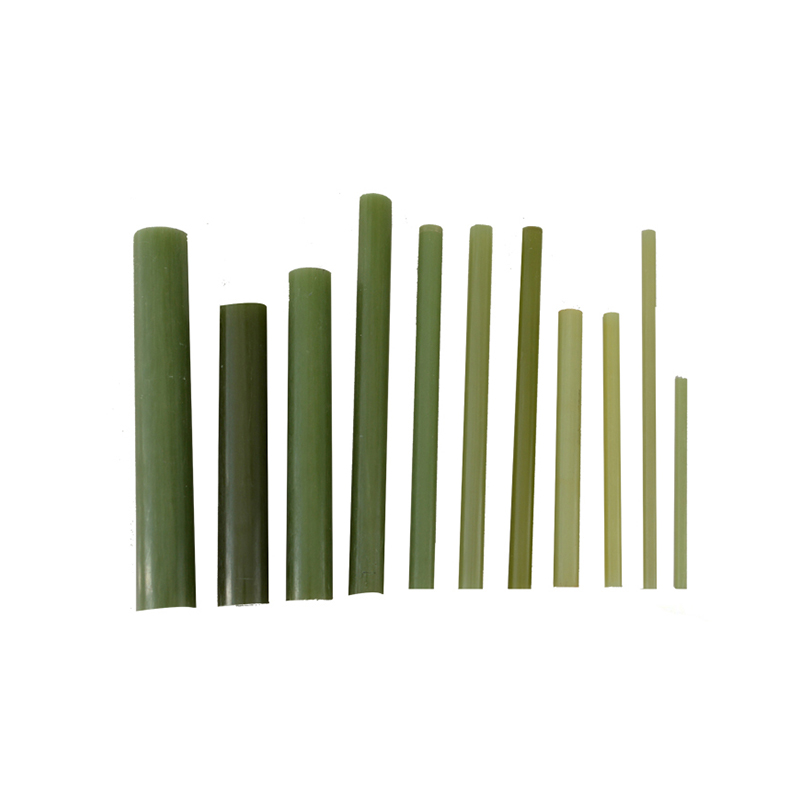
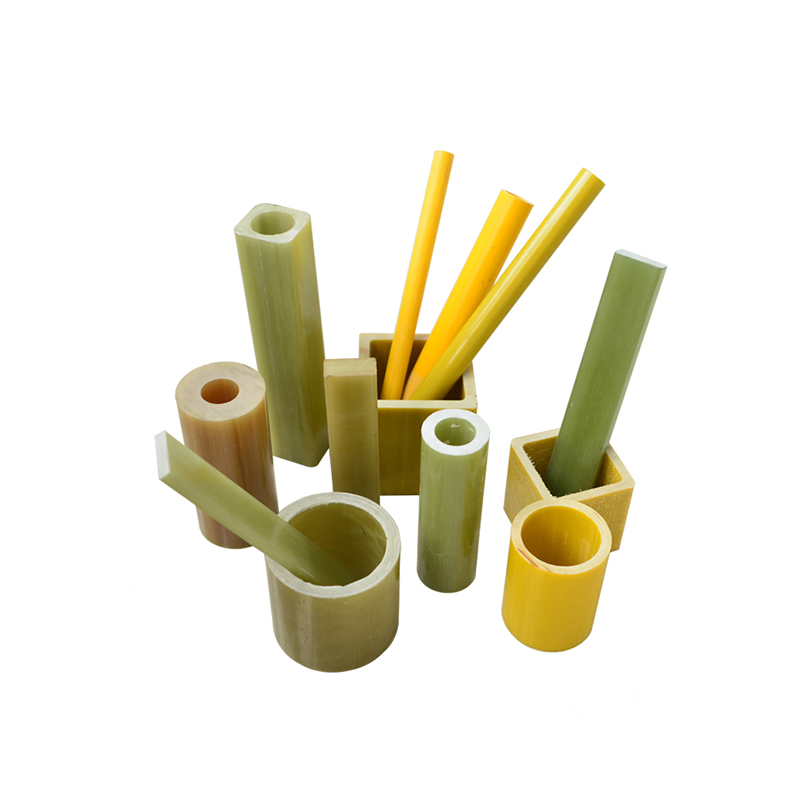
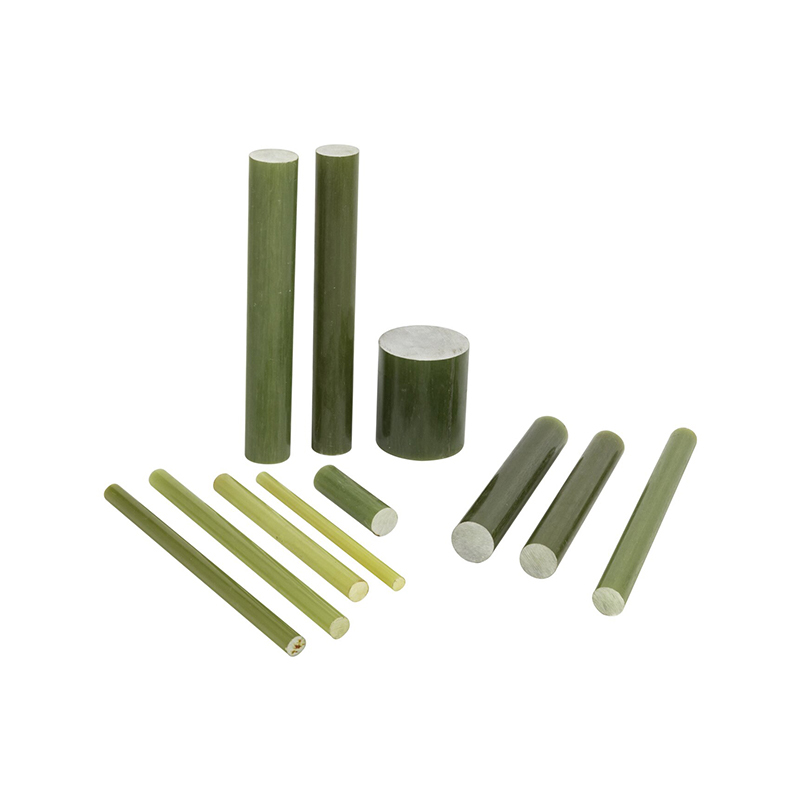
FRP ROD is a high-performance composite product built from a resin matrix reinforced with continuous glass fiber, and it forms the structural core of most composite insulators used across global power networks today. Also known as the epoxy glass fiber core rod, FRP ROD is produced through a pultrusion or molding process using epoxy resin as the matrix and glass fiber as the reinforcement, resulting in a cylindrical rod with a glass fiber content that usually reaches more than 80 percent. As a specialized FRP ROD profiles manufacturer, Taizhou HuaDong Insulated Material Co., Ltd supplies this material to power equipment producers who need a stable, insulating, and mechanically reliable core for their end products, and frp rod price naturally varies with diameter, length, and surface finish requirements.
What Makes Up an FRP Rod
The internal structure of an FRP rod is a composite with continuous fibers arranged in one oriented direction, wrapped and bound by an epoxy resin matrix. Because the glass fiber content typically exceeds 80 percent, the rod displays clear anisotropic behavior, meaning its axial strength is significantly higher than its radial strength. This directional strength profile is exactly why the rod performs well as a tension-bearing core inside a composite insulator, where most of the mechanical load runs along the length of the rod rather than across it.
| Property |
Description |
| Matrix material |
Epoxy resin |
| Reinforcement |
Glass fiber, generally above 80 percent content |
| Fiber orientation |
Continuous, unidirectional along the rod axis |
| Surface finish |
Smooth and flat, matte or semi-glossy |
| Common colors |
Green or yellowish |
Appearance and Surface Characteristics
FRP rods are cylindrical with a smooth, flat surface and either a matte or semi-glossy texture, most commonly appearing in green or yellowish tones. Taizhou HuaDong Insulated Material Co., Ltd manufactures its rods to this consistent surface standard, since surface uniformity affects how well the rod bonds with silicone rubber sheds and end fittings during later insulator assembly. Buyers sourcing frp rod price quotes should always confirm surface finish alongside diameter, since a rougher pultruded surface and a ground or polished surface are priced differently across the industry.
Why Performance Properties Matter
An FRP rod is judged mainly on how it behaves under sustained mechanical and environmental stress, not just on its initial strength. The material properties that matter most in field use include the following.
- Shock absorption and fatigue resistance — the rod withstands cyclic loads and vibration environments, which matters for rods used in overhead line hardware exposed to wind-induced movement.
- Creep resistance and fracture resistance — the rod resists deformation or breakage under long-term sustained load, a requirement for suspension-type insulator applications where tension is constant.
- High temperature resistance — stable performance is maintained even in elevated temperature environments near energized equipment.
- Stress corrosion resistance — the rod resists corrosion damage even under complex combined stress and moisture conditions, which is one of the most cited failure modes for lower-grade rods in humid climates.
- Insulating properties — high volume resistivity and high breakdown voltage make the rod function as an effective insulating member rather than only a mechanical one.
- Mechanical strength — the rod withstands sawing, milling, planing, drilling, and turning without losing structural integrity.
Machining and Processing
FRP rod accepts the same range of machining operations used on metal stock, including sawing, milling, planing, drilling, and turning. Internal threads can be tapped with a standard tap, and external threads can be produced by grinding. This machinability is a major reason FRP ROD profiles are chosen over solid metal cores for insulator applications, since fabricators can cut and finish rods to the exact stub lengths and thread patterns their crimping or bonding process requires. Taizhou HuaDong Insulated Material Co., Ltd works directly with customers on these dimensional requirements as part of its custom services, adjusting rod diameter and end preparation to match the metal end fittings the buyer intends to install.
Where FRP Rod Is Used
FRP rod is widely used across power systems as the internal support structure of composite insulators, providing mechanical strength while preserving electrical insulation. Typical applications include:
- Rod-type suspension composite insulator
- Pillar composite insulator
- Cross-arm composite insulator
- Drop switch composite insulator
- Isolating switch
- Windproof composite insulator
- Interphase spacer rod composite insulator
- Electrified railway contact network
In every one of these applications, the rod sits inside the finished insulator as the load-bearing core, connected at both ends to metal end fittings and covered externally by silicone rubber sheds.
Product Range from Taizhou HuaDong Insulated Material Co., Ltd
Taizhou HuaDong Insulated Material Co., Ltd, formerly known as Yangzhou Dajieshi FRP products Co., Ltd, was founded in October 1994 and has been producing FRP ROD profiles and related terminal parts and accessory products for three decades. The company's FRP ROD line is organized into three product categories.
Insulator Core Rod
The epoxy fiberglass core rod used as an intermediate connector and insulating part inside composite insulators, serving as the primary mechanical and dielectric core.
Epoxy Rod
Epoxy resin based FRP rod produced for applications requiring stable insulating performance combined with high tensile strength along the rod axis.
Fiberglass Rod
Glass fiber reinforced rod stock supplied in cylindrical form for further machining and integration into insulator and line fitting assemblies.
Beyond the FRP rod itself, the company also manufactures related terminal and accessory products, including various types of composite insulators, silicone rubber insulator fittings, and line fittings, allowing customers to source the rod core and its downstream components from a single supplier. The epoxy fiberglass core produced by the company functions as an intermediate connector and insulating part and is used across many kinds of composite insulator production.
Global Reach and Application Fields
The profiles and composite insulators produced by Taizhou HuaDong Insulated Material Co., Ltd are used in electric power electronics and electrical railways, as well as in the construction, automotive, and environmental protection fields. The company's products are sold across North and South America, Africa, Asia, and Europe, reaching countries including the USA, Kenya, Korea, India, Vietnam, Iran, Russia, Germany, and Romania, in addition to wide distribution within China. This international footprint reflects the company's positioning as a well-known supplier in the global insulation products field.
Sourcing Considerations and Frp Rod Price
When evaluating frp rod price across suppliers, buyers are comparing more than a per-meter or per-piece number. Diameter tolerance, glass fiber content, surface finish, and end machining all factor into the final quote. Because Taizhou HuaDong Insulated Material Co., Ltd operates its own production facility for FRP ROD profiles rather than trading through intermediaries, it is positioned to offer factory direct frp rod price along with custom dimensional adjustments for buyers who need rods matched to specific insulator or line fitting designs.
Frequently Asked Questions
What is the difference between FRP rod and fiberglass rod
Within the industry these terms largely overlap. FRP rod refers broadly to fiber reinforced plastic rod made with a resin matrix and continuous glass fiber reinforcement, while fiberglass rod describes the same glass fiber reinforced construction. Both are cylindrical, with a glass fiber content typically above 80 percent and epoxy resin as the binding matrix.
Why is FRP rod used inside composite insulators instead of metal
FRP rod combines high axial mechanical strength with strong insulating properties, including high volume resistivity and high breakdown voltage. A metal core would conduct electricity, defeating the purpose of an insulator, while FRP rod provides the needed tensile support without compromising dielectric performance.
Can FRP rod be machined after production
Yes. FRP rod accepts sawing, milling, planing, drilling, and turning. Internal threads can be tapped with a standard tap, and external threads can be produced by grinding, which allows fabricators to prepare rod ends for metal end fitting installation.
What colors does FRP rod typically come in
Common colors for FRP rod are green or yellowish, with a smooth, flat surface finished in either a matte or semi-glossy texture.
What factors affect frp rod price when requesting a quote
Rod diameter, length, surface finish, and end machining requirements are the main variables that affect frp rod price. Sourcing directly from a manufacturer such as Taizhou HuaDong Insulated Material Co., Ltd rather than through a trading intermediary can also affect the final factory direct price offered.
Which industries rely on FRP rod besides power transmission
While FRP rod is most associated with power system applications such as suspension, pillar, cross-arm, and windproof composite insulators, isolating switches, and electrified railway contact networks, the underlying FRP ROD profiles produced by the company are also applied in construction, automotive, and environmental protection fields.
Does FRP rod perform well in high temperature or humid environments
FRP rod is designed to maintain stable performance in higher temperature environments and to resist stress corrosion, meaning it is less prone to corrosion damage even under complex combined stress conditions, which supports its use in varied climates across the international markets the company serves.
Can rod dimensions be customized for a specific insulator design
Yes. Taizhou HuaDong Insulated Material Co., Ltd offers custom services for FRP ROD profiles, adjusting diameter, length, and end preparation so the rod matches the metal end fittings and overall insulator design a customer is building.