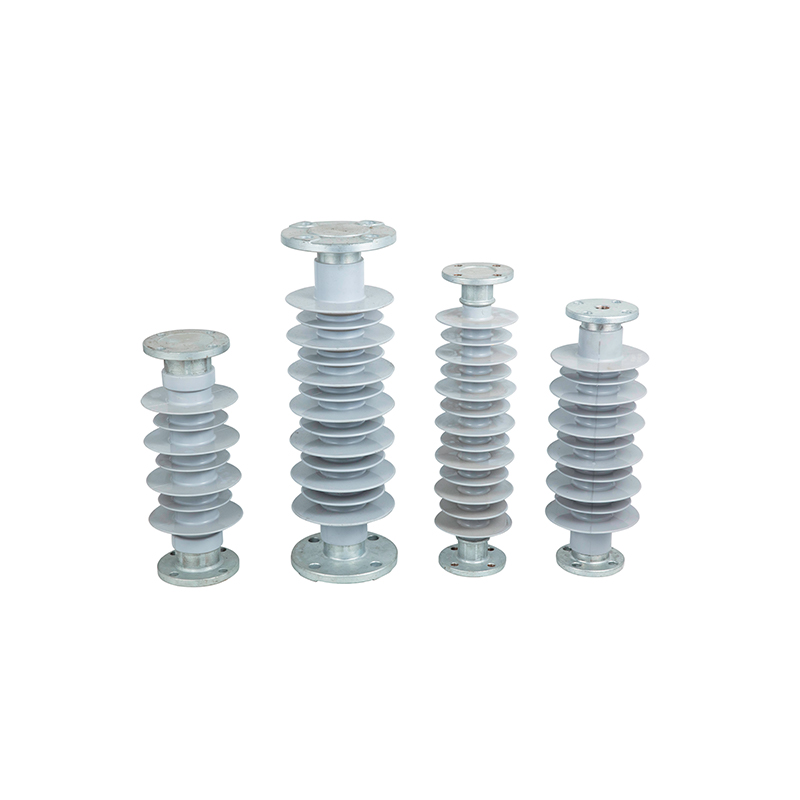
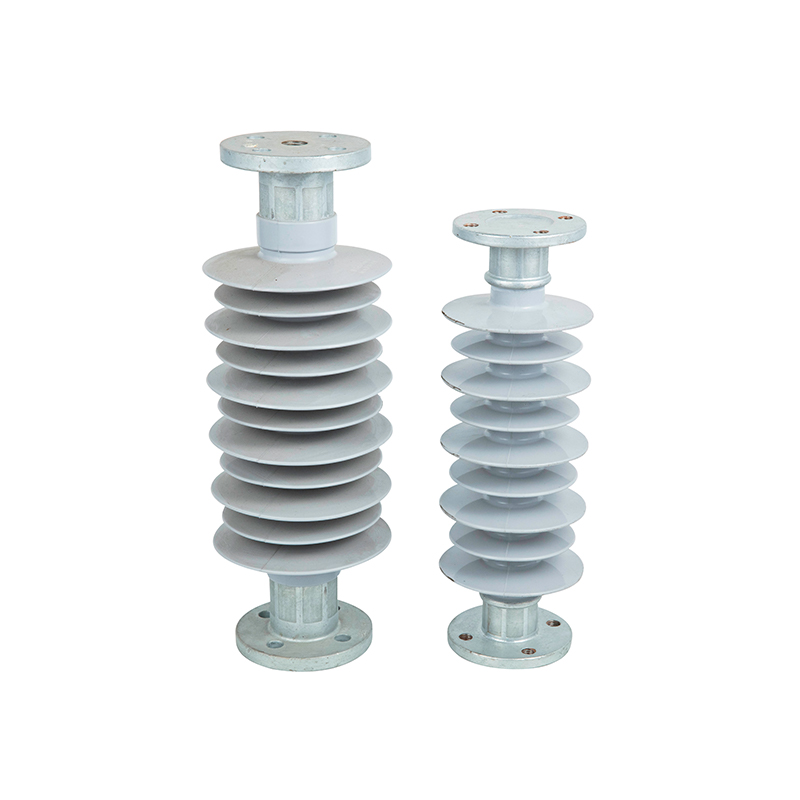
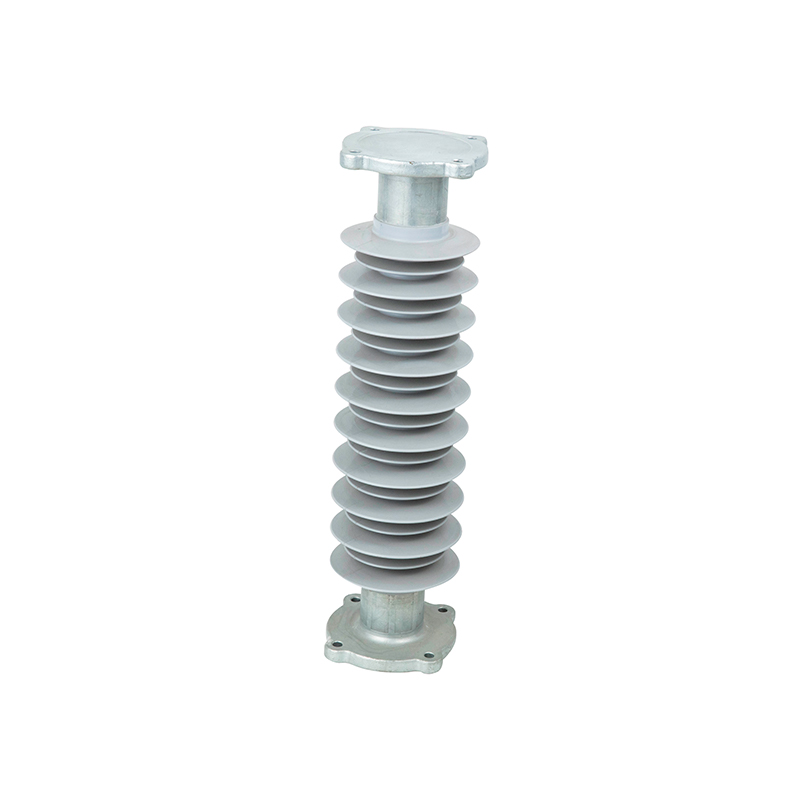
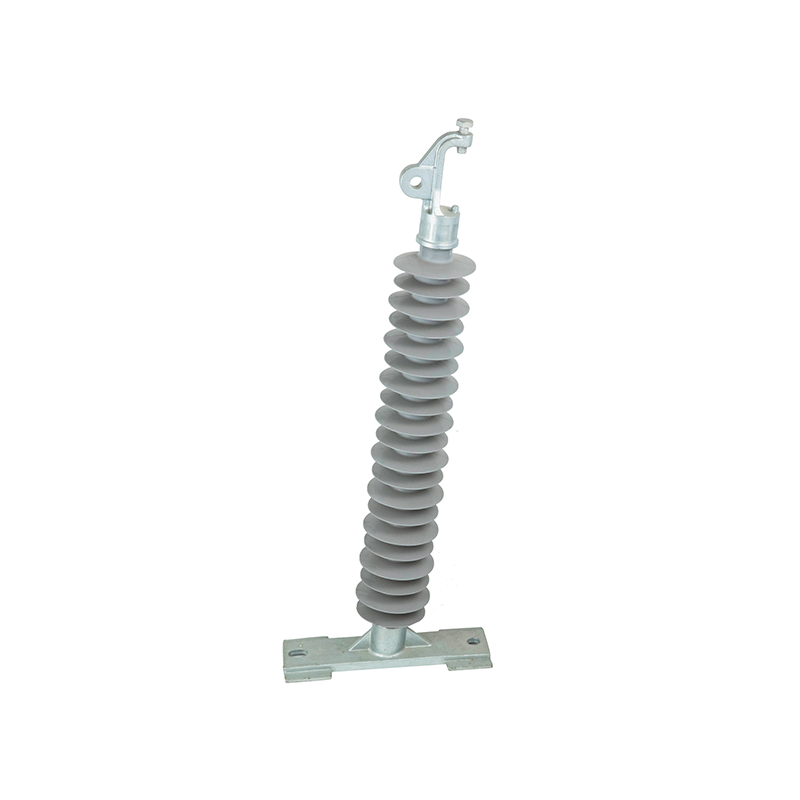
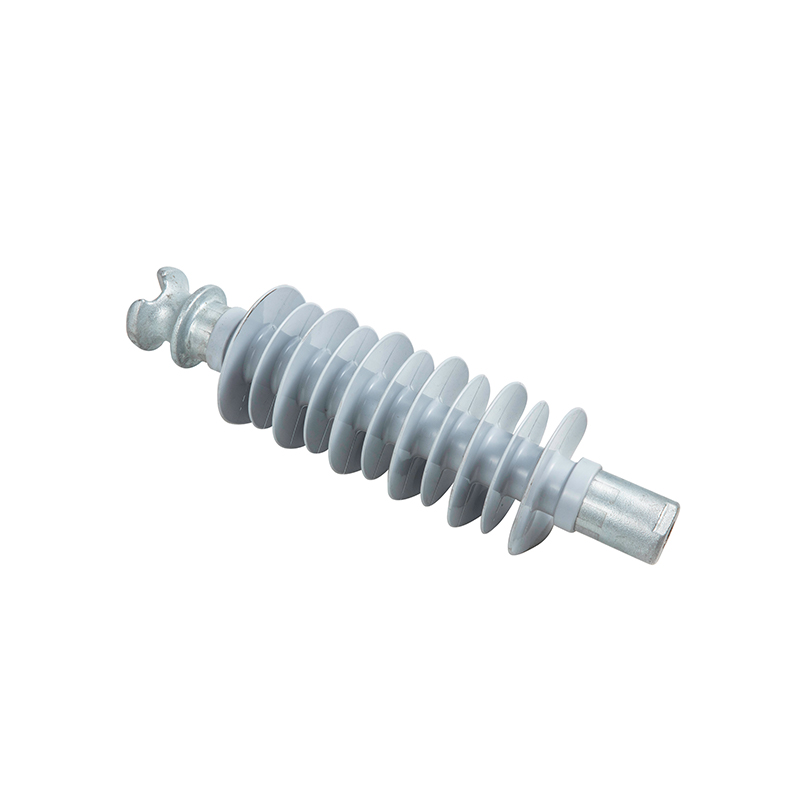
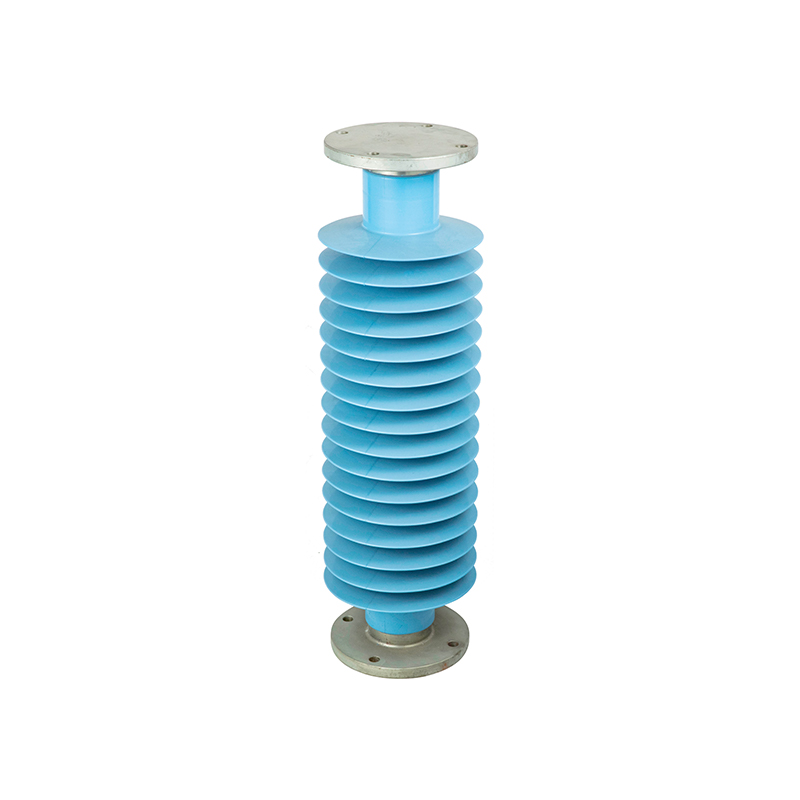
A composite post insulator is an insulating support component used in substation facilities within power systems; it is a specific type of composite insulator. Its primary function is to support conductors and equipment while simultaneously ensuring electrical insulation.
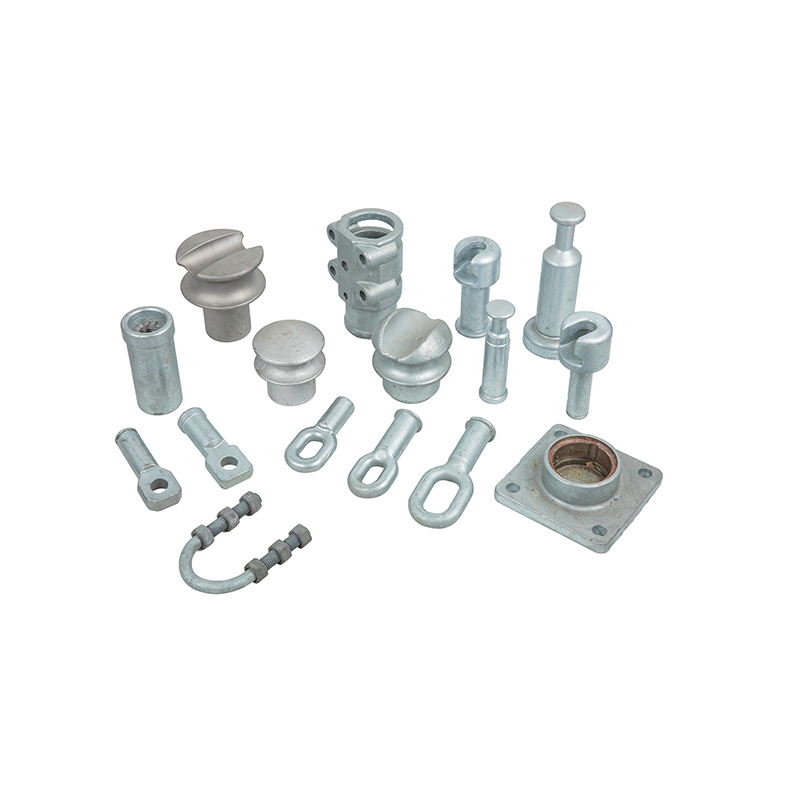
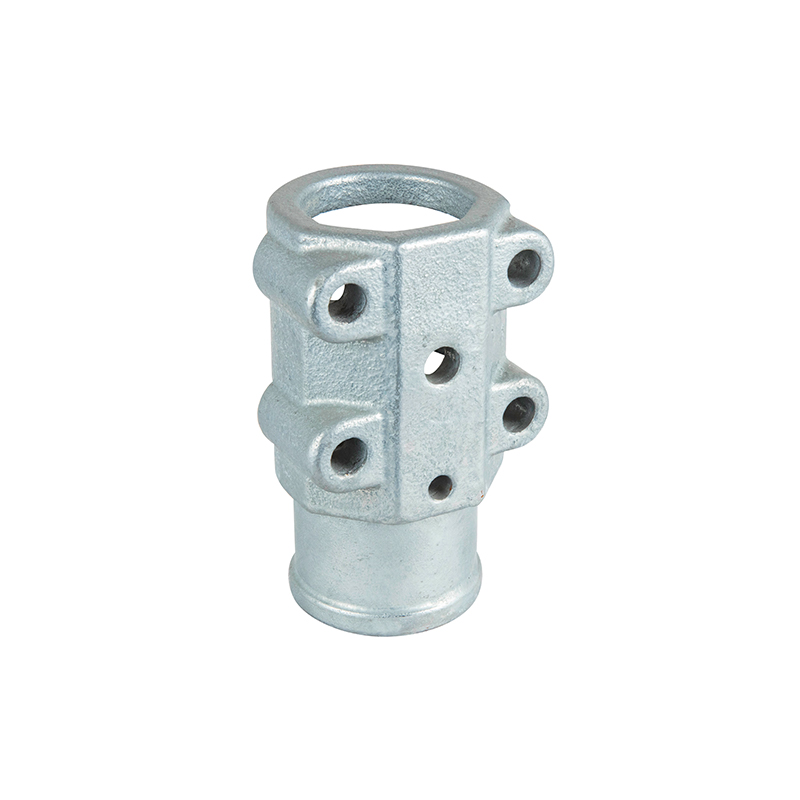
1. Structural Composition A composite post insulator consists of three main parts: Core Rod: Typically made from glass fiber-reinforced epoxy resin, this serves as the internal load-bearing structure, providing high-strength mechanical support. Sheds: The exterior is covered with silicone rubber material, arranged in a multi-layered umbrella-like structure; its surface possesses hydrophobic properties, effectively preventing pollution flashover. End Fittings: The top and bottom ends are equipped with metal flanges or threaded connectors, used to secure the insulator to equipment or support towers.
2. Key Features Excellent Hydrophobicity: The surface of the silicone rubber sheds automatically repels moisture, maintaining excellent insulation performance even in humid or polluted environments, thereby effectively preventing pollution flashover. Strong Aging Resistance: The materials are resistant to ultraviolet radiation and aging, ensuring a long service life. Resistance to Tracking and Corrosion: It can withstand the adverse effects of harsh environments, such as acid rain, salt fog, and industrial pollution. Superior Mechanical Properties: It exhibits high resistance to bending, compression, and impact; its vibration resistance and resistance to brittle fracture are superior to those of traditional porcelain insulators. Lightweight: Compared to porcelain insulators, it is significantly lighter, facilitating easier transportation and installation while simultaneously reducing the structural load on support towers. Convenient Installation: The mounting dimensions at the top and bottom are identical to those of traditional porcelain post insulators, allowing for direct interchangeability without the need to modify existing equipment foundations.
3. Scope of Application Composite post insulators are primarily utilized in substation facilities: Insulating supports for substation busbars Insulating supports for switchgear equipment Insulating isolation for power distribution equipment
No.
Type
Rated Voltage (kV)
Mechanical Failing Load
Mounting Height (mm)
Arcing Distance (mm)
Creepage Distance (mm)
Lightning Impulse Withstand Voltage (Peak) ≥ (kV)
Power Frequency Withstand Voltage (Effective Value) ≥ (kV)
As China Composite Post Insulator Manufacturers and Composite Post Insulator Company, Taizhou HuaDong Insulated Material Co., Ltd (FORMER Yangzhou Dajieshi FRP products Co., Ltd), which was founded in October in 1994.
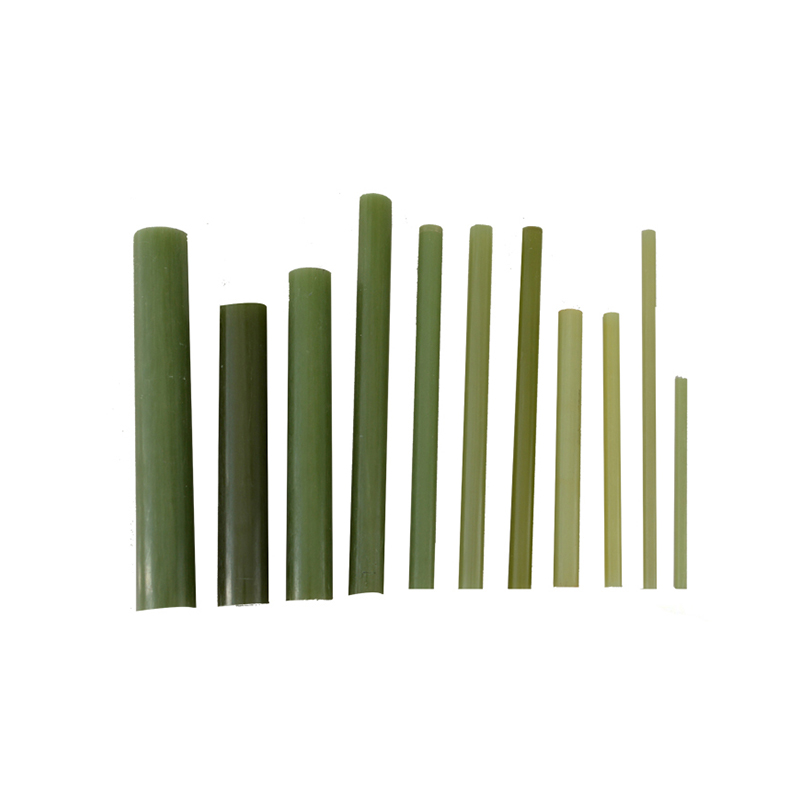
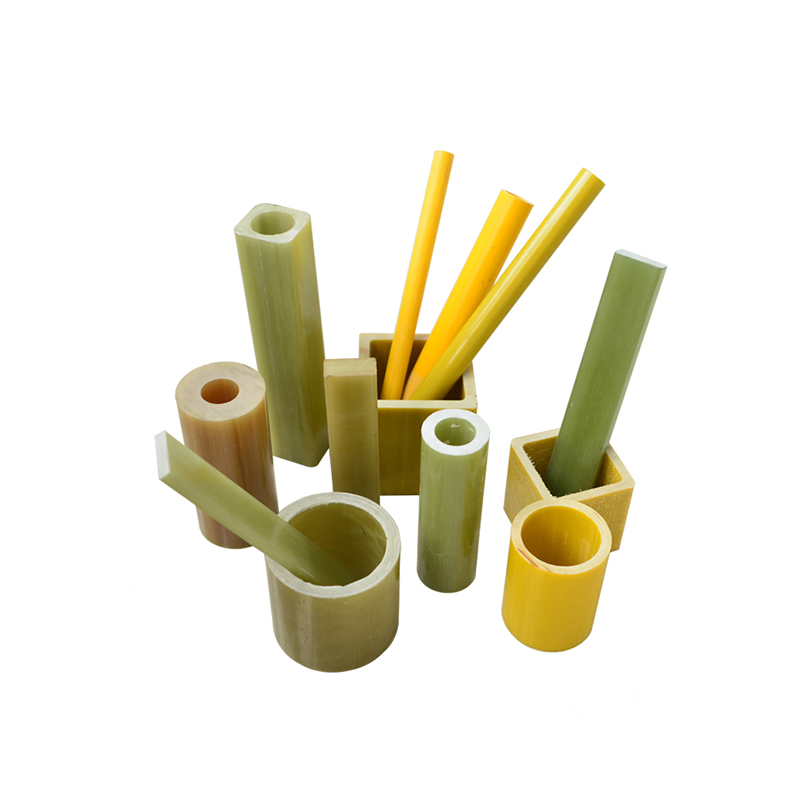
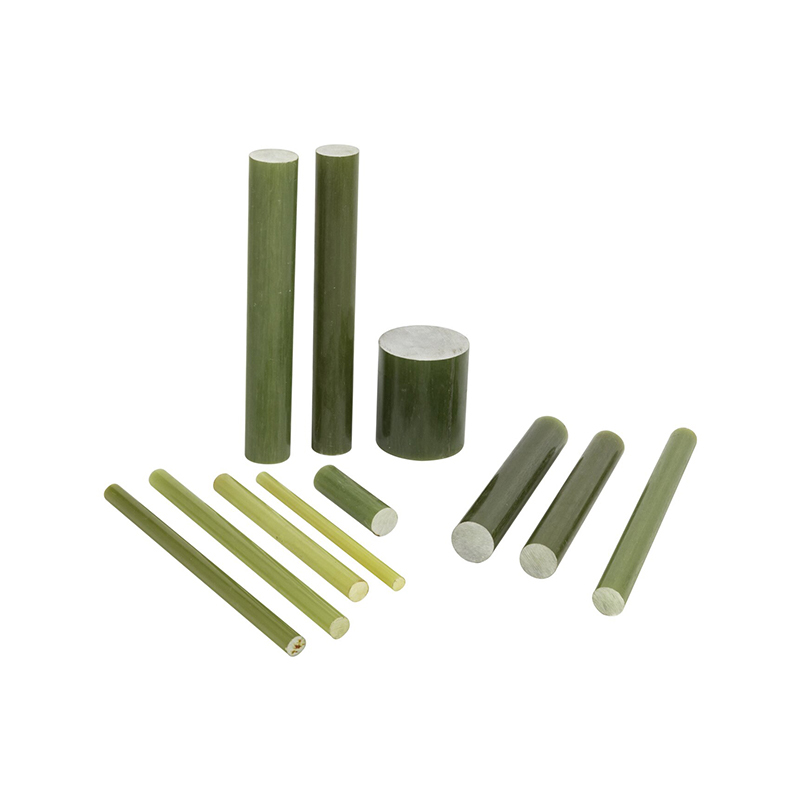
Our company is mainly engaged in the production of FRP ROD profiles, related terminal parts and accessory products. The terminal and accessories products such as various types of composite insulators, silicone rubber insulator fittings, line fittings and so on.The epoxy fiberglass core we produce as an intermediate connector and insulating parts is widely used in all fields and many kinds of composite insulator production. The profiles and composite insulators are widely used in electric power electronics and electrical railways. In the construction, automotive and environmental protection field IHIM products arewidely sales in North and South America.Africa.Asia. Europe ete such as USA.Kenya. Korea.India, Vietnam, Iran, Russia, Germany.Romania and other countries and vast areas in our country. THIIM is becoming a well-known supplier for insulation products field globally.
A composite insulator that fails in service rarely fails because the silicone housing was the wrong color. It fails because the fiberglass core inside it was selected, manufactured, or handled without enough attention to the details that actually control mechanical strength and ...
An overhead railway line is only as reliable as its least visible component. The railway insulator, often taken for granted, is the hard-working barrier that keeps high-voltage current in the catenary wire and away from masts, bridges and maintenance crews. Choosing the wrong in...
At 6:40 on a weekday morning, the 27.5 kV feeder inside a busy urban tunnel loses insulation. The pantograph drops, the train glides to a halt, and every service behind it stacks up. In most cases the failed component is not the feeder cable or the circuit breaker, but the railw...
A composite post insulator is an insulating support component used in substation facilities within power systems, built to support conductors and equipment while ensuring electrical insulation at the same time. Taizhou HuaDong Insulated Material Co., Ltd manufactures composite post insulators as one specific type within its broader composite insulator product range, engineered for busbar supports, switchgear equipment, and power distribution installations inside substations.
Structural Composition
A composite post insulator consists of three main parts, and Taizhou HuaDong Insulated Material Co., Ltd builds each one to a specific function within the finished support column.
A
Core Rod
Typically made from glass fiber reinforced epoxy resin, the core rod serves as the internal load-bearing structure, providing high-strength mechanical support.
B
Sheds
The exterior is covered with silicone rubber material arranged in a multi-layered umbrella-like structure. The hydrophobic surface effectively prevents pollution flashover.
C
End Fittings
Metal flanges or threaded connectors at the top and bottom secure the insulator to equipment or support towers.
Key Features
Every composite post insulator produced by Taizhou HuaDong Insulated Material Co., Ltd is built around six measurable performance traits that set it apart from traditional porcelain post insulators.
Excellent Hydrophobicity
The silicone rubber shed surface automatically repels moisture, maintaining insulation performance in humid or polluted environments and effectively preventing pollution flashover.
Strong Aging Resistance
Materials are resistant to ultraviolet radiation and aging, ensuring a long service life in outdoor substation conditions.
Resistance to Tracking and Corrosion
The insulator withstands the adverse effects of harsh environments such as acid rain, salt fog, and industrial pollution.
Superior Mechanical Properties
High resistance to bending, compression, and impact, with vibration resistance and resistance to brittle fracture superior to traditional porcelain insulators.
Lightweight
Significantly lighter than porcelain insulators, which makes transportation and installation easier while reducing the structural load on support towers.
Convenient Installation
Mounting dimensions at the top and bottom match traditional porcelain post insulators, allowing direct interchangeability without modifying existing equipment foundations.
Scope of Application
Composite post insulators are primarily used in substation facilities. Founded in October 1994 as Yangzhou Dajieshi FRP Products Co., Ltd and now based in Jiangyan district, Taizhou city, Jiangsu province, Taizhou HuaDong Insulated Material Co., Ltd supplies composite post insulators together with its other composite insulator, FRP rod, and metal end fitting product lines to customers across North and South America, Africa, Asia, and Europe, including the USA, Kenya, Korea, India, Vietnam, Iran, Russia, Germany, and Romania.
Insulating supports for substation busbars
Insulating supports for switchgear equipment
Insulating isolation for power distribution equipment
Technical Specifications
Model selection depends on rated voltage, mechanical load, and mounting geometry. The specifications below cover the composite post insulator models Taizhou HuaDong Insulated Material Co., Ltd manufactures, from 10kV up to 220kV.
FZSW-10/410 kV
Bending Load4 kN
Torque1.2 kN.m
Mounting Height350 mm
Arcing Distance210 mm
Creepage Distance540 mm
Lightning Impulse Withstand75 kV
1min Dry / 1min Wet42 kV / 30 kV
Mounting Hole Center / Diameter127 mm / 18 mm
FZSW-35/435 kV
Bending Load4 kN
Torque1.2 kN.m
Mounting Height420 mm
Arcing Distance280 mm
Creepage Distance625 mm
Lightning Impulse Withstand185 kV
1min Dry / 1min Wet100 kV / 80 kV
Mounting Hole Center / Diameter127 mm / 18 mm
FZSW-110/10110 kV
Bending Load10 kN
Torque4 kN.m
Mounting Height1220 mm
Arcing Distance1080 mm
Creepage Distance3200 mm
Lightning Impulse Withstand450 kV
1min Dry / 1min Wet265 kV / 185 kV
Mounting Hole Center / Diameter127 mm / 18 mm
FZSW-220/8220 kV
Bending Load8 kN
Torque4 kN.m
Mounting Height2300 mm
Arcing Distance2160 mm
Creepage Distance6300 mm
Lightning Impulse Withstand950 kV
1min Dry / 1min Wet495 kV / 395 kV
Mounting Hole Center / Diameter127 mm / 18 mm
Frequently Asked Questions
What is a composite post insulator used for
It is used as an insulating support component in substation facilities, supporting conductors and equipment such as busbars, switchgear, and power distribution equipment while ensuring electrical insulation.
What is the difference between a composite post insulator and a composite pin insulator
A composite post insulator is used as a support column for substation busbars, switchgear, and distribution equipment, while a composite pin insulator is designed for mounting on transmission line crossarms.
Can a composite post insulator replace a porcelain post insulator directly
Yes, the mounting dimensions at the top and bottom match traditional porcelain post insulators, allowing direct interchangeability without modifying existing equipment foundations.
What voltage levels are available for composite post insulators
Models are available from 10kV up to 220kV, with mechanical bending loads ranging from 4kN to 10kN depending on the type.
Are composite post insulators resistant to acid rain and salt fog
Yes, they are built to withstand the adverse effects of harsh environments including acid rain, salt fog, and industrial pollution without losing tracking and corrosion resistance.
What mounting hole specifications do composite post insulators use
Across the FZSW series, the mounting hole center distance is 127mm with an 18mm hole diameter, keeping hardware consistent across the 10kV to 220kV range.
Is a composite post insulator heavier or lighter than a porcelain post insulator
It is significantly lighter than a porcelain post insulator, which makes transportation and installation easier while reducing the structural load placed on support towers.
What creepage distance do composite post insulators provide
Creepage distance varies by voltage class, ranging from 540mm on the 10kV FZSW-10/4 model up to 6300mm on the 220kV FZSW-220/8 model.