1. Key Applications and Functions
24kV fuses play a critical protective role within power systems. When an overload or short-circuit fault occurs in a circuit, the fuse rapidly interrupts the fault current, thereby protecting equipment—such as transformers, voltage transformers, capacitors, cables, or transmission lines—from damage. Once the current exceeds a preset safety threshold, the internal fuse element automatically melts and severs the circuit. This process isolates the faulted section from the remainder of the power system, preventing the fault from propagating and ensuring the continuous, normal, and stable operation of the power grid.
2. Main Types
Based on their structural design and application scenarios, 24kV fuses can be categorized into several main types:
High-Voltage Current-Limiting Fuses are the most common type. They typically feature a ceramic housing structure, with internal components primarily consisting of the fuse element, quartz sand insulating filler, and contact terminals. When a fault occurs, the electric arc generated by the melting fuse element is rapidly absorbed and extinguished by the quartz sand, thereby achieving rapid current-limiting protection. These fuses are frequently used for transformer protection and can be utilized in conjunction with devices such as load switches or vacuum contactors.
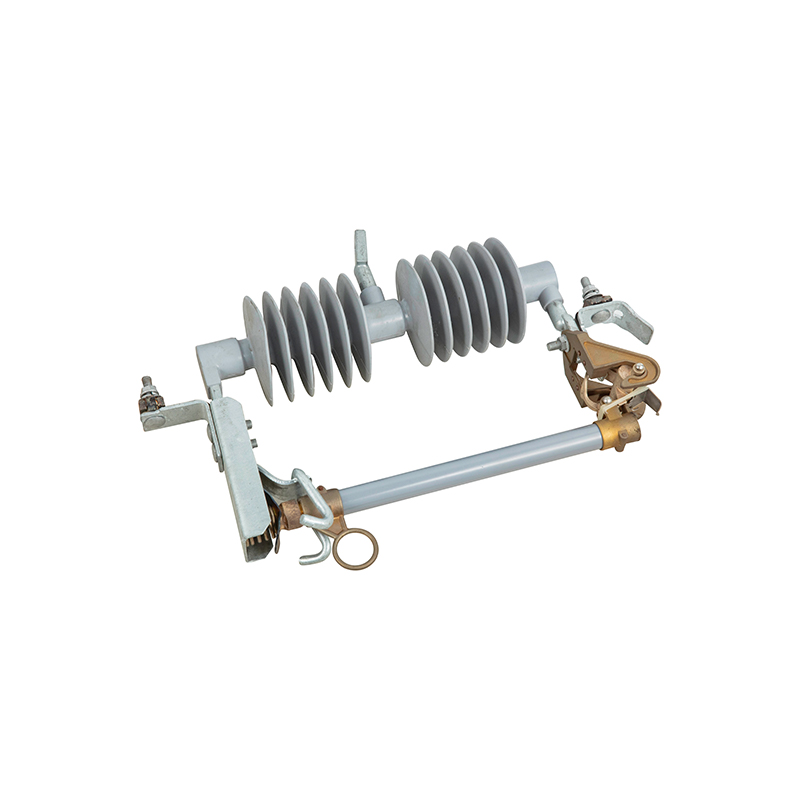
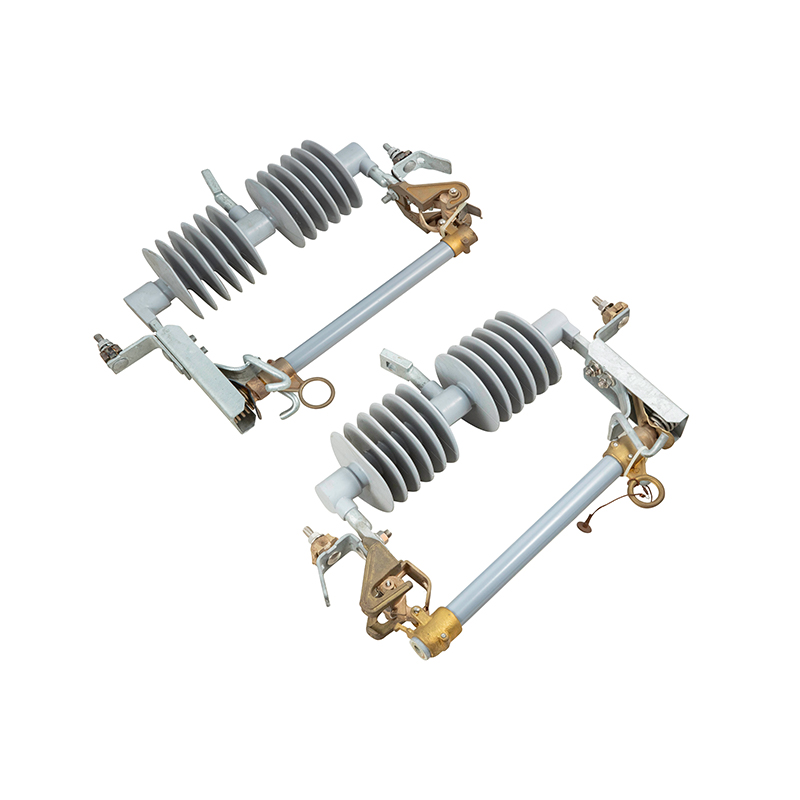
Drop-out Fuses are a type of expulsion fuse; when the fuse element melts, the fuse tube (the fuse carrier) automatically drops open, creating a visible air gap that facilitates inspection and maintenance. These fuses are primarily used for the protection of outdoor distribution lines and pole-mounted transformers.
Voltage Transformer Protection Fuses are devices specifically designed to provide short-circuit protection for voltage transformers, reliably isolating a faulted voltage transformer from the high-voltage system.
3. Working Principle
The working principle of a fuse is relatively simple yet highly effective. Under normal operating conditions, the fuse element remains in a conductive state, allowing current to flow through it unimpeded. However, when an overload or short-circuit fault occurs within the circuit, the current surges abruptly. Subsequently, due to this increased current, the fuse element heats up; once it reaches its melting point, it melts and severs the circuit. During this fusing process, the resulting electric arc is absorbed by internal filler materials (such as quartz sand) contained within the fuse. Simultaneously, a "jet effect"—or gas pressure—assists in extinguishing the arc, thereby reliably interrupting the faulty circuit.
4. Application Scenarios
24kV fuses are widely utilized across numerous fields. In rural distribution networks, 24kV fuses are frequently employed to protect pole-mounted transformers; in the event of a ground fault, they automatically isolate the fault point, thereby minimizing power supply interruptions for nearby users. In urban and industrial power grids—particularly in locations with strict spatial constraints and rigorous safety requirements—drop-out fuses effectively prevent overloads and short circuits, working in coordination with devices such as circuit breakers and sectionalizing switches. Furthermore, these fuses serve as critical auxiliary components, finding extensive application in high-voltage switchgear, ring main units (RMUs), and prefabricated high/low-voltage substations.
5. Structural Features
High-voltage fuses typically feature a cylindrical ceramic housing, which provides excellent insulation properties and mechanical strength. The interior is filled with arc-extinguishing materials—such as quartz sand—capable of rapidly absorbing arc energy and extinguishing the arc. Contacts are situated at both ends of the fuse to facilitate connections between the power source side and the load side. Some designs also incorporate status indication mechanisms—such as strikers or indicators—to provide a visual display of whether the fuse has successfully operated (blown).